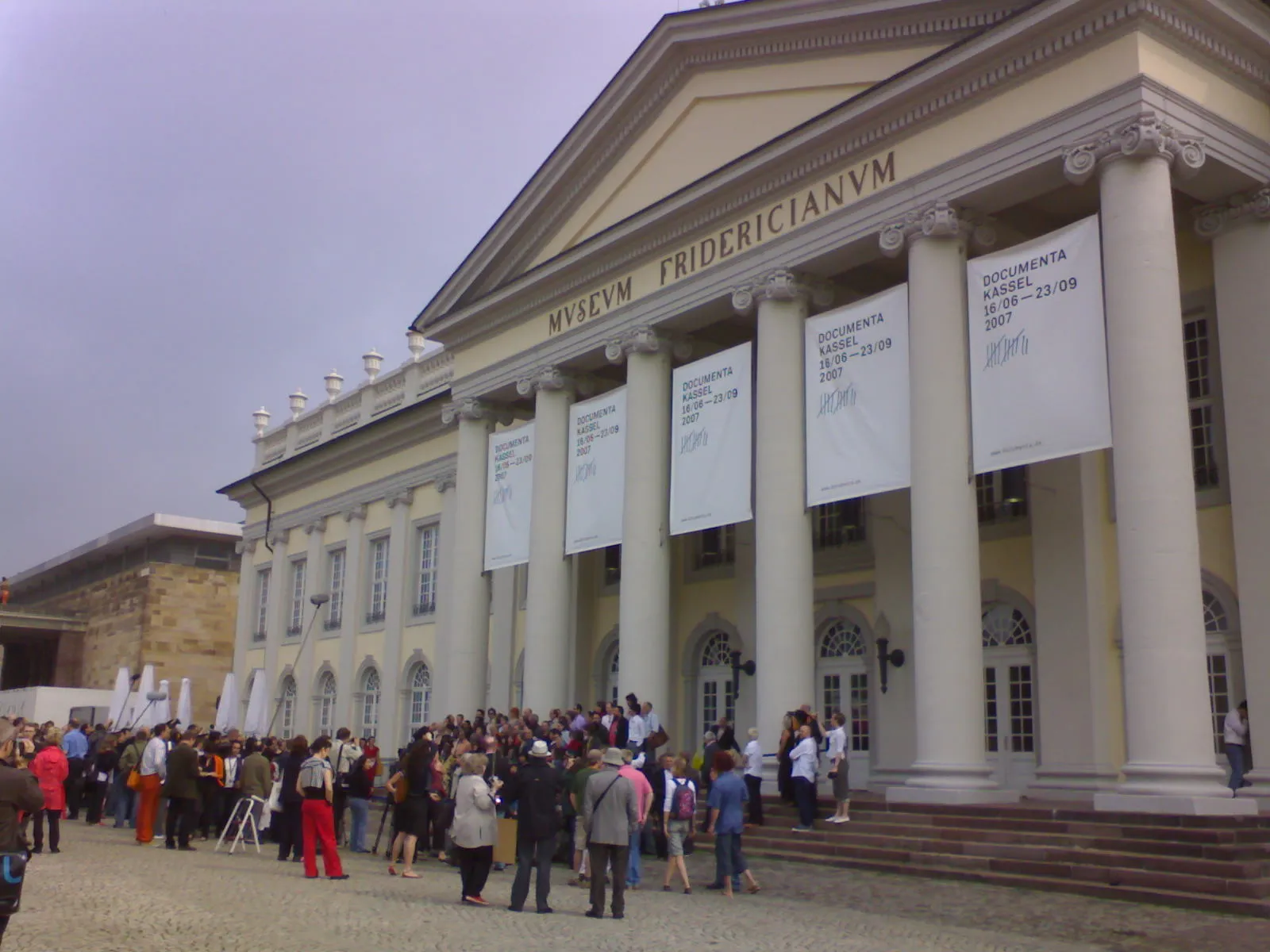
Documenta 12
June 16 – September 23, 2007
Artistic Direction: Roger M. Buergel
Сurator: Ruth Noack
Both had written a programmatic statement on their flags, and it was called “Migration of Form”. What was meant by this was that visual culture in human history has to make do with a few basic forms, which are then used in art history in different contexts and content orientations. Buergel/Noack emphasized that “contemporary does not mean that the works were created yesterday. They must be significant for us today. documenta 12 aims at historical lines of development in art as well as unexpected contemporaneities”. In order to make these “unexpected simultaneities” visible, works of art from different decades and cultures in which similar formal patterns emerged were placed in relation to one another. This was intended to reveal a “migration” of aesthetic forms across temporal and cultural boundaries through to the art of our postmodern world.
The program of documenta 12, whose artist line-up had the highest proportion of women in documenta history to date at around 50 percent, was also structured by three so-called “leitmotifs”. Firstly: Is modernity our antiquity? Secondly: What is mere life? And thirdly: What to do? The first leitmotif asked to what extent our thinking and lives are still “deeply permeated by modern forms and visions” (Buergel/Noack). The second leitmotif was in some respects linked to Jan Hoet’s documenta 9, as it dealt with the existential creatureliness of human beings, which in the postmodern age is permanently threatened by torture, terrorism and climate catastrophes. Finally, the third leitmotif focused on the problem of the (discursive) mediation of art, of “aesthetic education” (Buergel). To this end, Buergel/Noack, together with the Viennese art publicist Georg Schöllhammer, founded the international magazine project documenta 12 magazines.