ANATOLY OSMOLOVSKY
Artist, theorist, curator.
1969 born in Moscow.
Lives and works from 2024 in Berlin.
Since 2011, rector and founder
of the Baza Institute.
Founder of the Baza
publishing house.
Since 2018, head of the
Laboratory of Art Criticism.
Autobiography
PRIMUS IN PROXIMO
2022 – ...
2012 – 2022
SARCASTIC ART
Speaking of Osmolovsky’s works created after 2012, we may say that sarcasm is not the word that expresses a feeling, but a technique of deconstructing form, as indicated by its etymology (Greek σαρκασμός, “to tear flesh”).
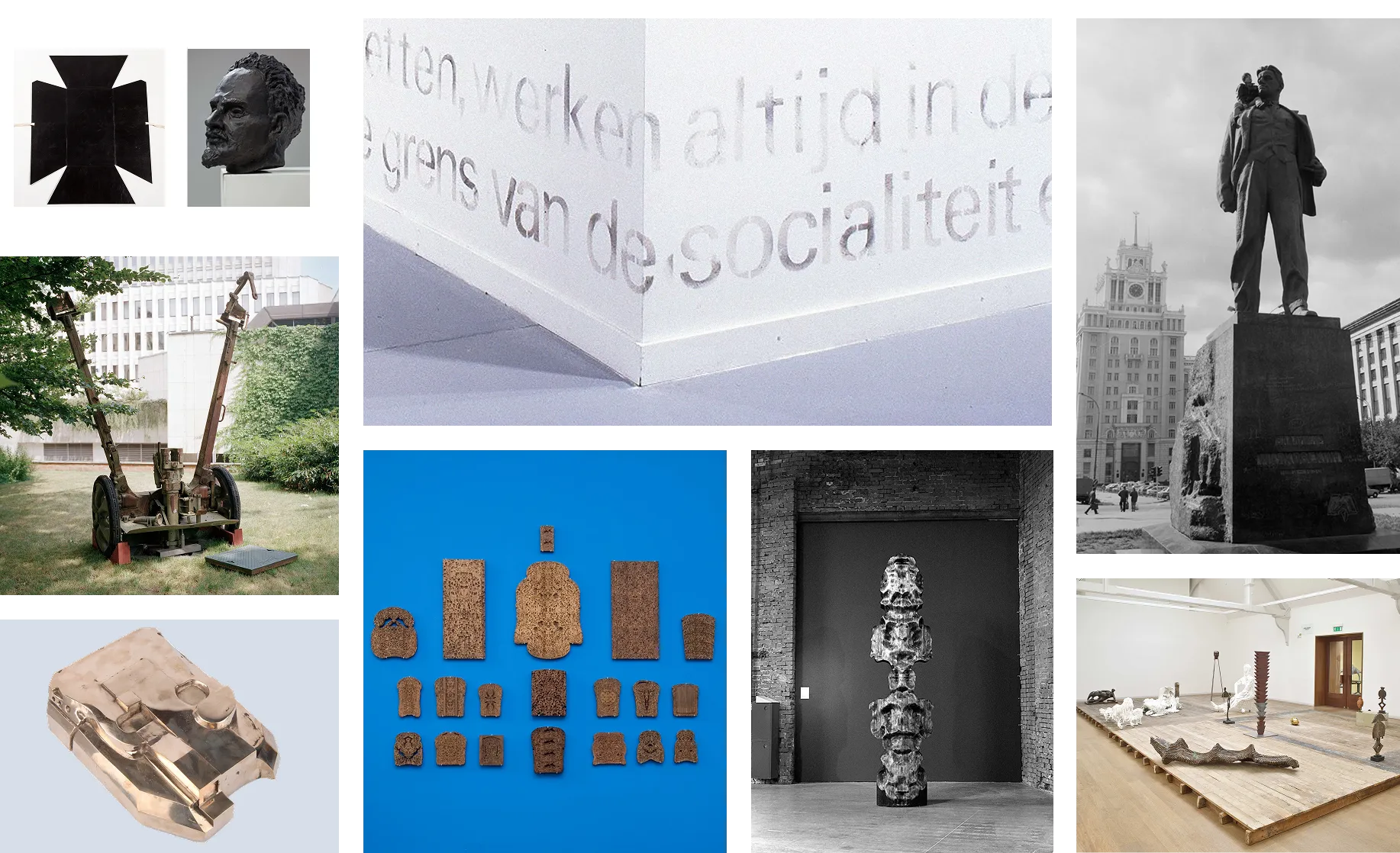
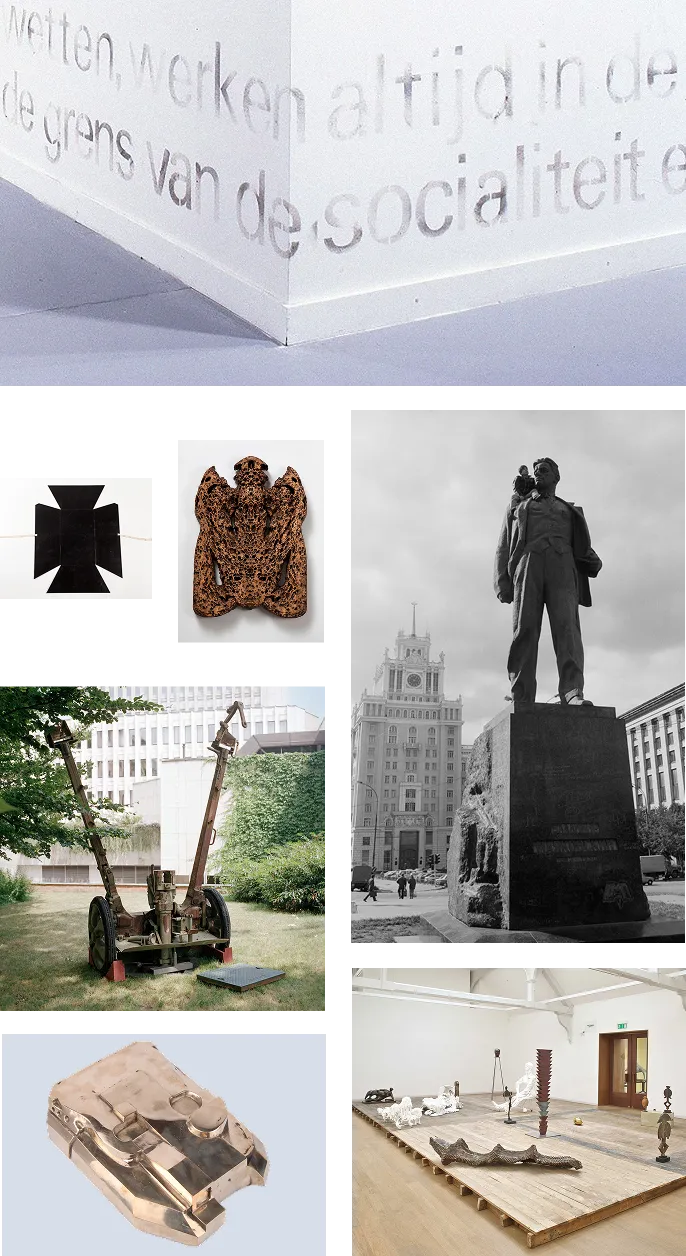
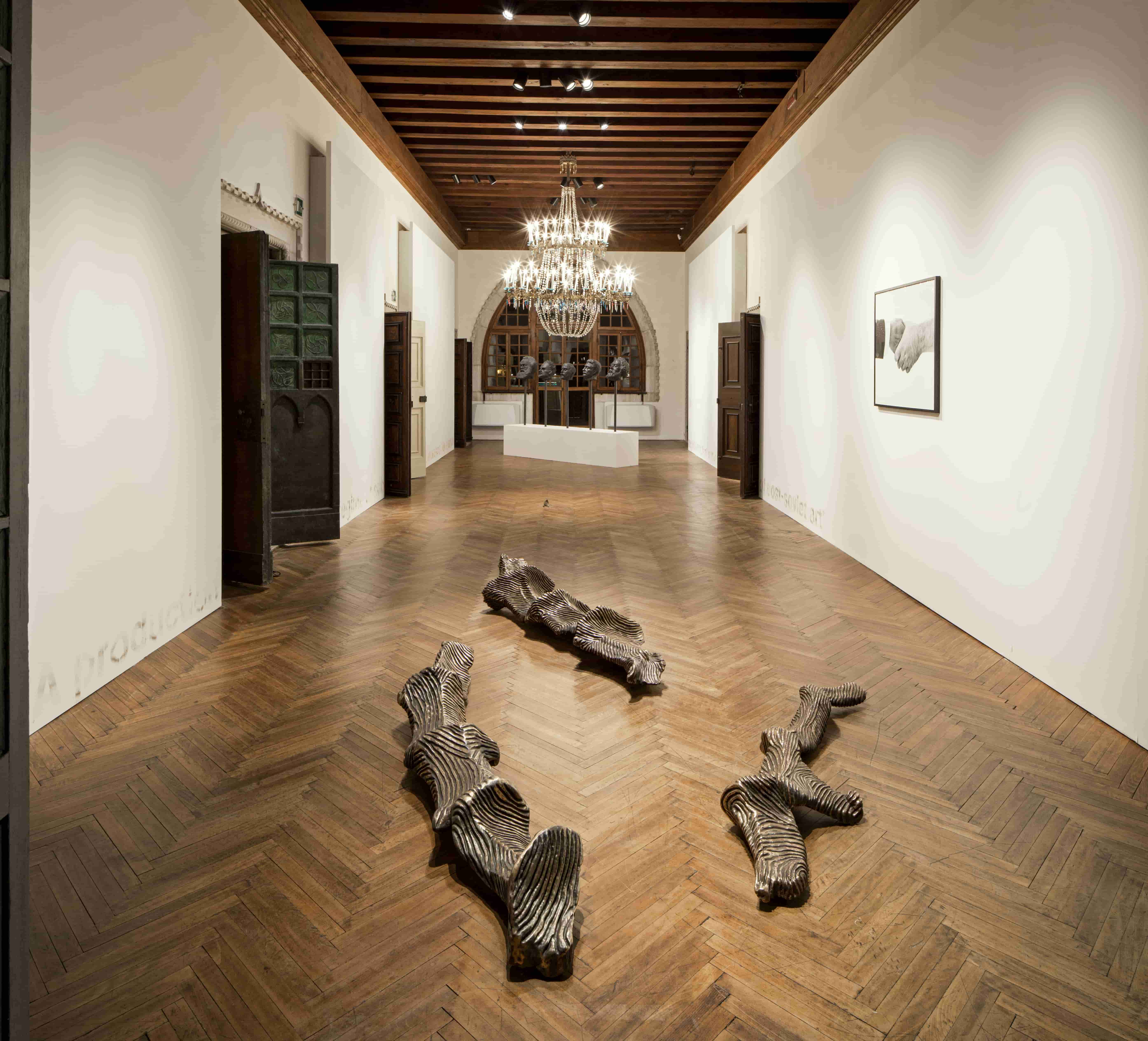
This is a field of visual analytics, where the image appears either in separate parts or in a semi-disassembled form, when all parts are present but separated from each other. In the work shown at the solo exhibition as part of the 55th Venice Biennale, “Did you do this? No, you did this!”, the severed heads of revolutionaries would appear as symbols, evidence of today's emasculation and mutilation of the legacy of class struggle theory.
Incompleteness and fragmentation sometimes appear as a formal technique of pictorial composition, as in the installation Exquisite Corpse and Twelve Suicides, which references Leonardo da Vinci's fresco The Last Supper.
In the monumental bronze composition Ukrainian Woman, created using the Frankenstein method, the emphasis is placed precisely on the clearly visible seams—the violent joining of fragments into a whole.
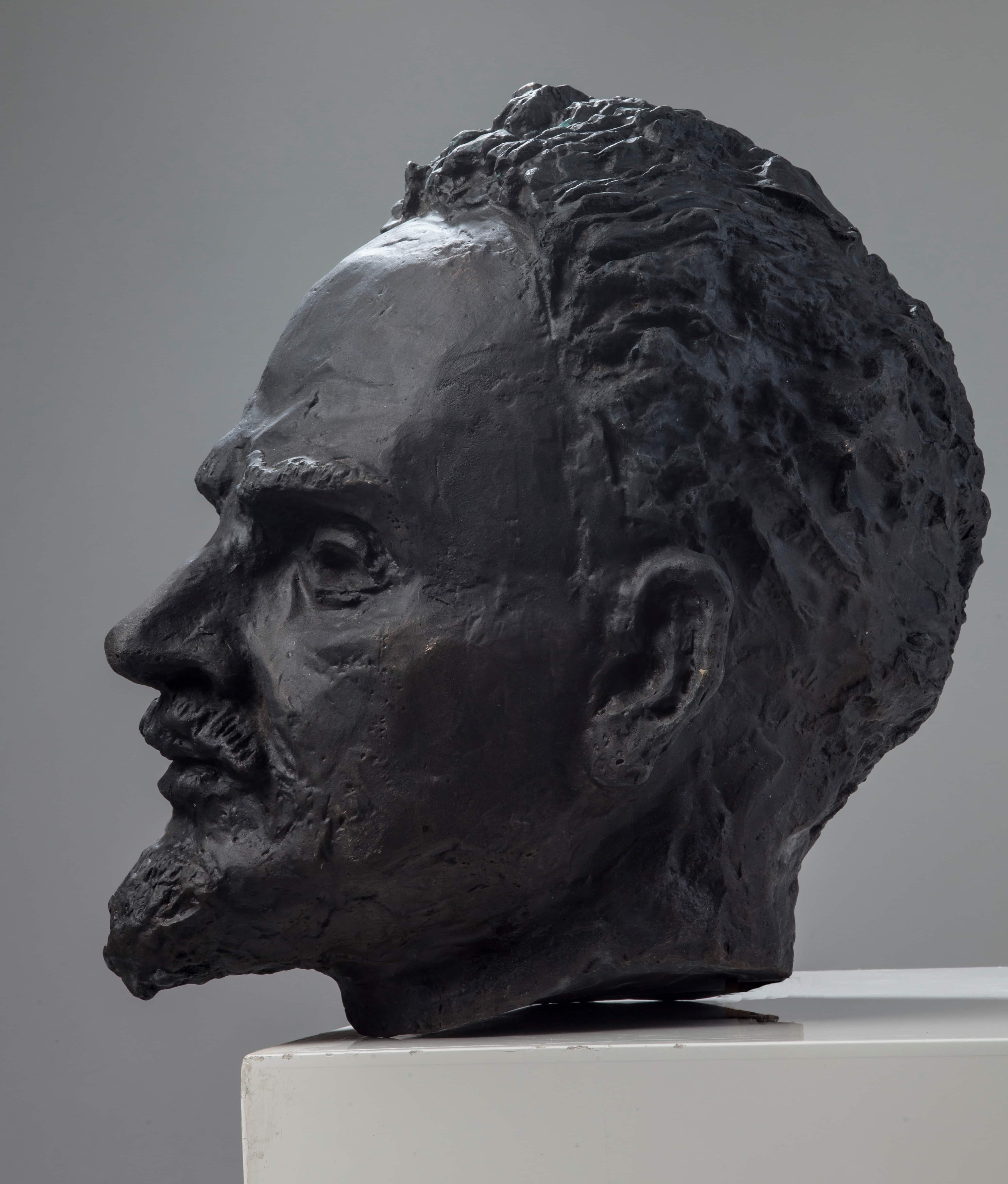
In this strategy, death theme is logical, even if it is not about decomposition, but about the emergence of some unified form, like a sculptural portrait of the dead Vladimir Mayakovsky, created by Osmolovsky’s creative group as part of the VI Moscow Biennale of Contemporary Art.
But even when the semantics of death is not explored in the art work, and the creative method is about increasing and intensifying meaning, the sarcastic representation of the method—the multiple amplification of a mosquito's squeak—deprives the viewer of any illusions (“Mosquito Anthem,” 2021).
PROJECTS
2011 – Institute Baza
2012 – Did You Do This? — No, You Did This!
2013 – Cadavre Exquis and Dodici Suicide
2014 – V-A-C Collection by Mike Nelson
2015 – The Death of Modernism in Russia
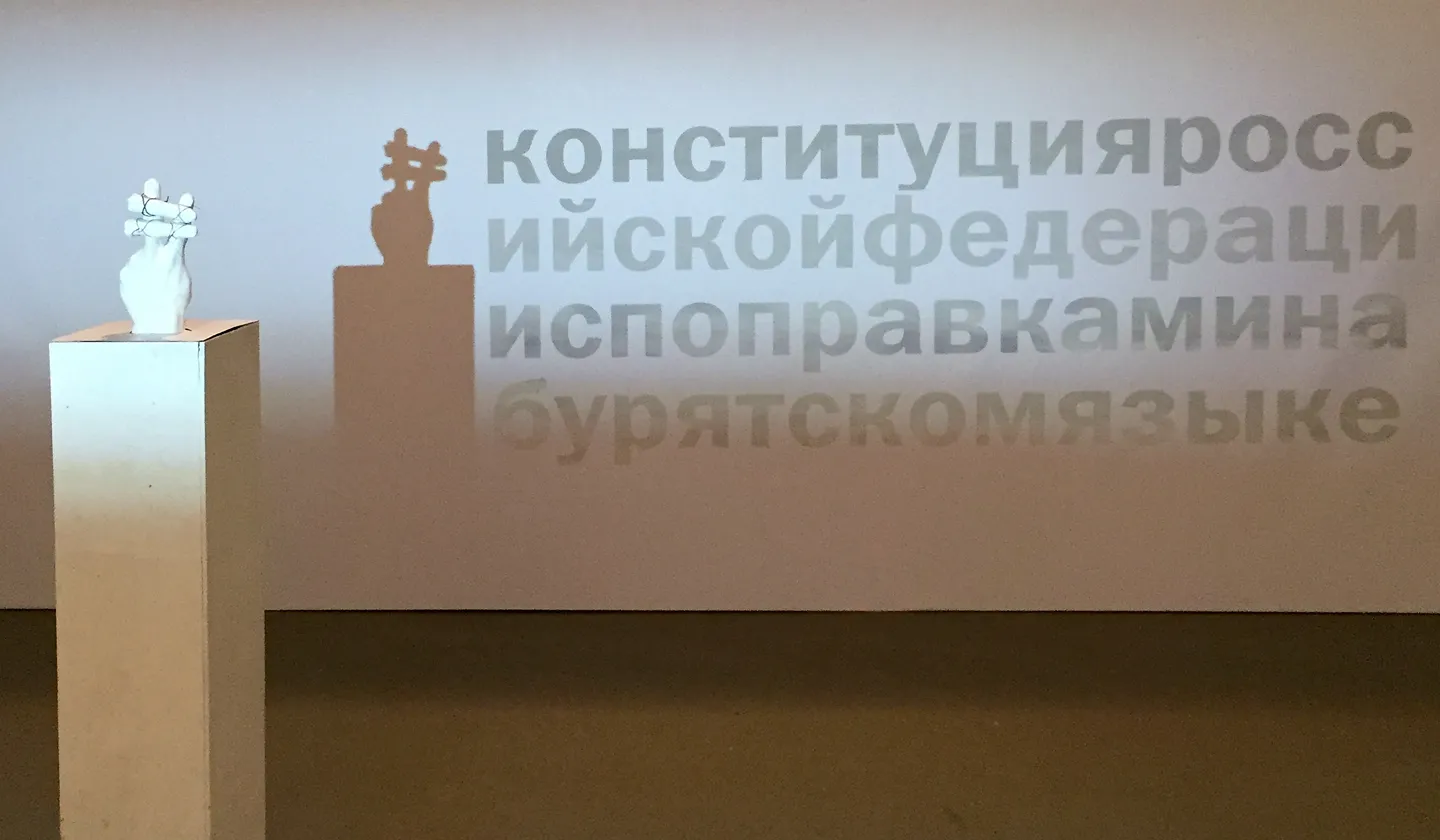
2018 – Soft verge
2007 – 2012
BREAD. ICONOSTASIS. AURATISM
Artist is looking in substantive world for objects that may be a material for ULTIMATE statement. This is the same as philosophical trope or concept.
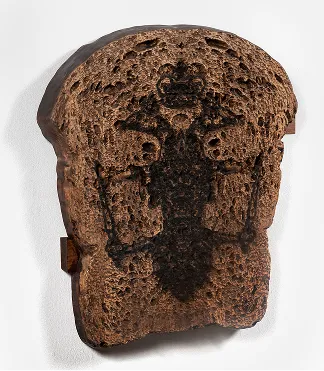
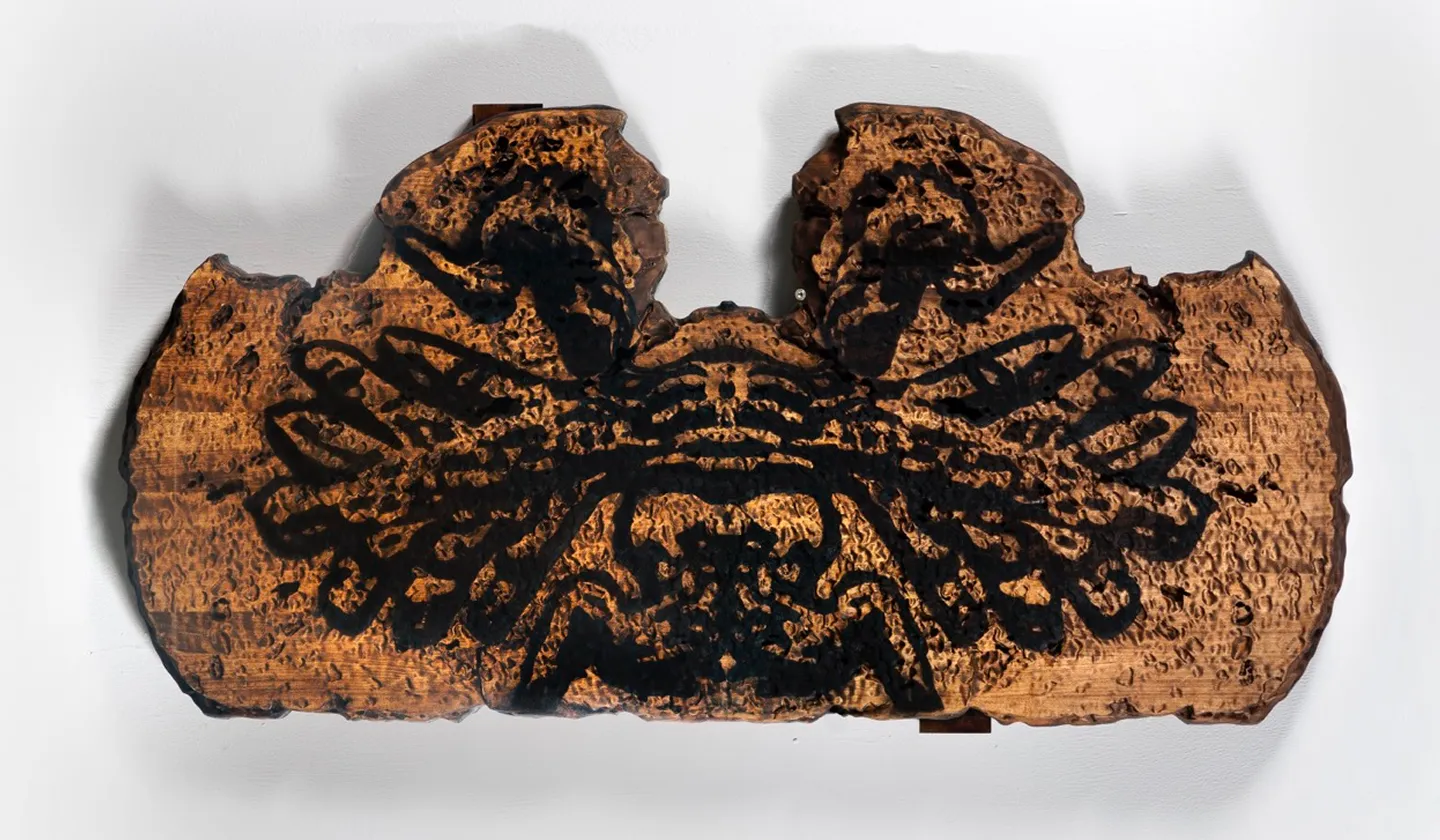
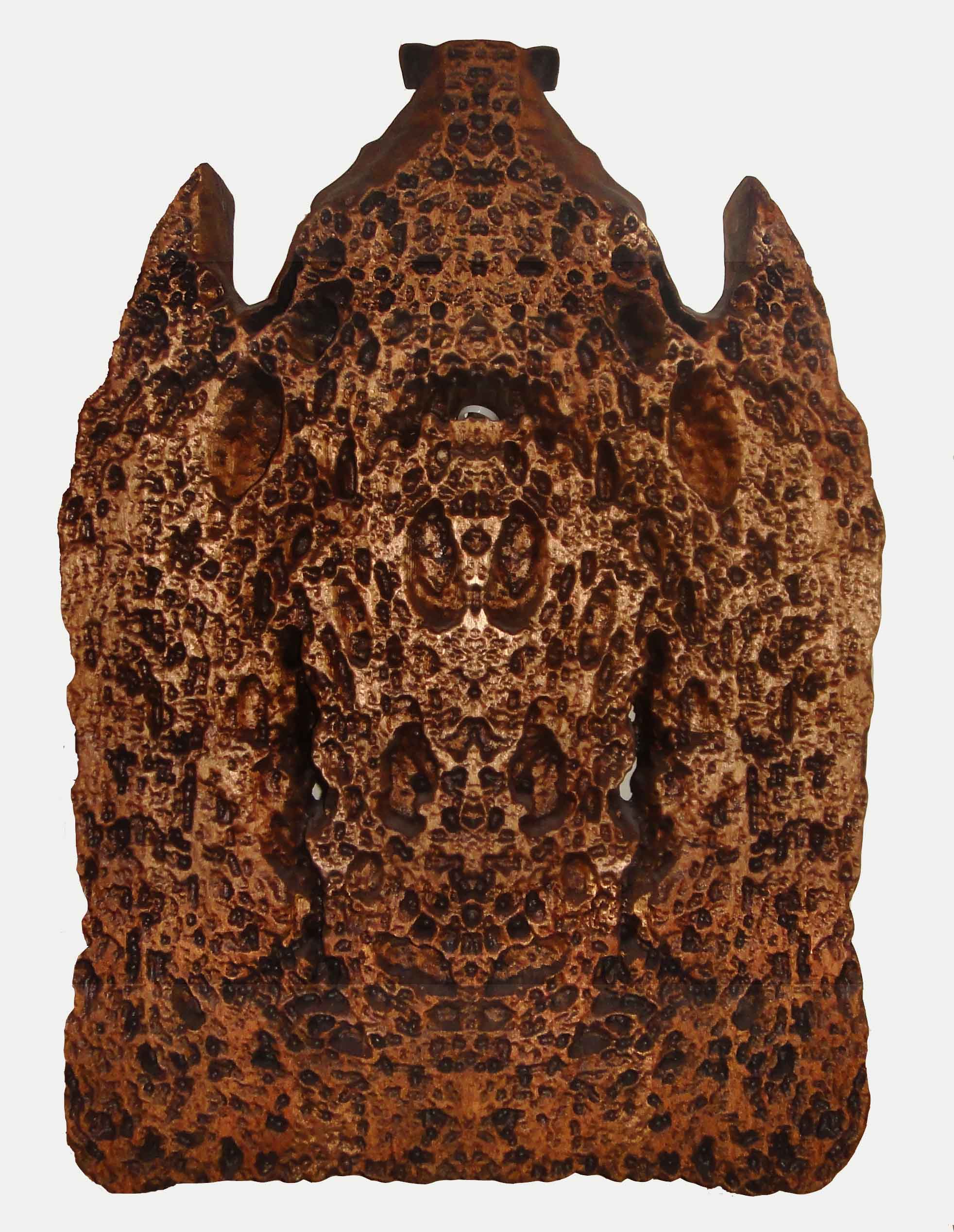
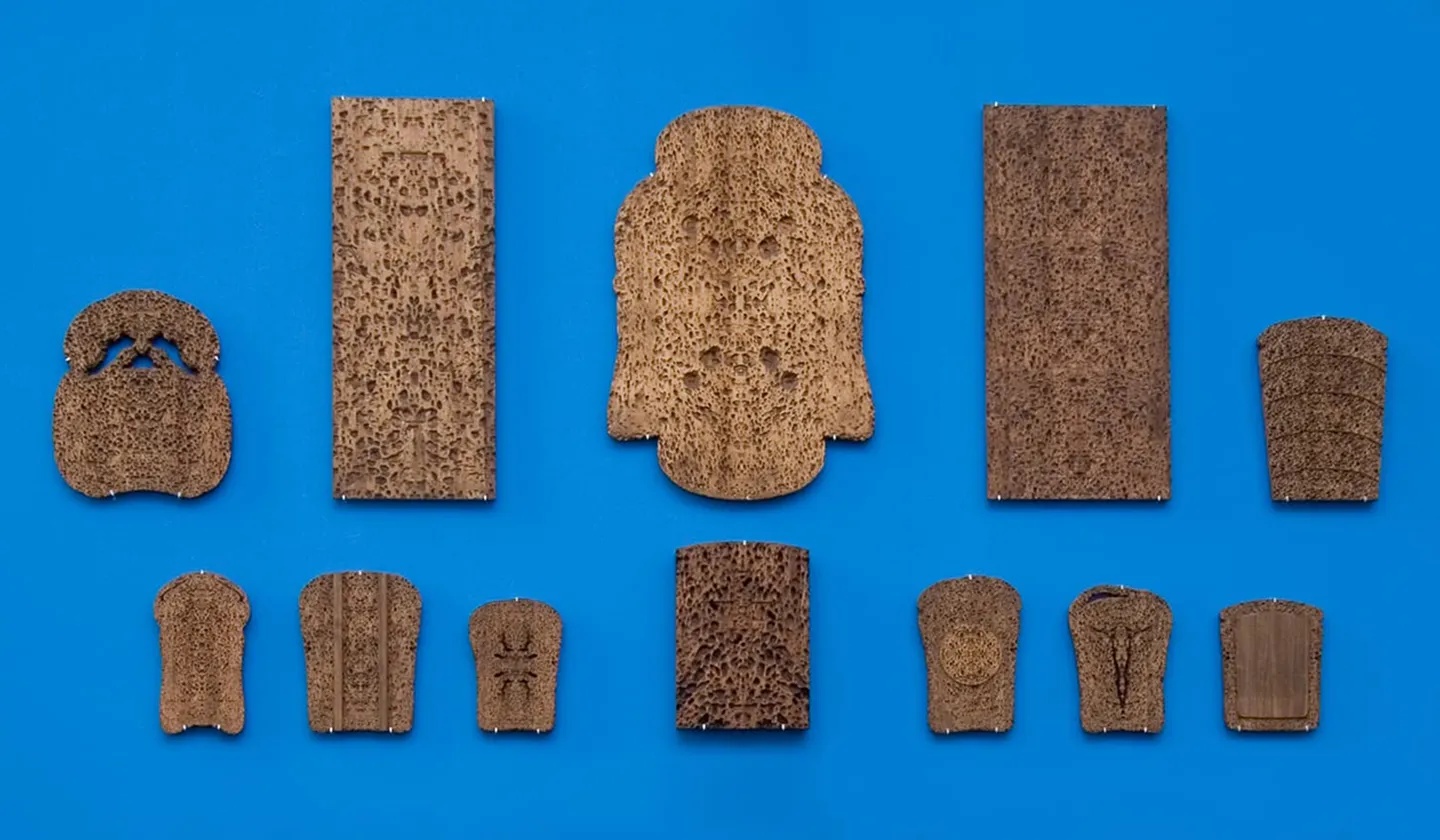
If we analyze the "bread" series from the standpoint of the primary base component, the most important thing in them is the texture of bread itself. What is important is the chaos of forms, through holes, cavities, cracks that occur at the surface of slice. Texture of bread represents the concept of pure chaos. There isn't any visible point in the bread, which would be similar to another. Here the main role plays not the problem of texture as it is with its "beaty" and tactile "sensuality", but a facture expressing the idea of CHAOS.
For example, Jackson Pollock was creating chaos in his works by dripping. His work (its important component) was to create an ABSOLUTELY chaotic NONFIGURATIVE image. Texture of bread originally contains this chaos. Therefore, the next step is to challenge it. The texture is duplicated, repeated (often on the central vertical axis of symmetry), what creates a "miraculous" effect - inimitable, in principle, chaotic matter is thoroughly and precisely repeated. From one point of view, this repetition "hangs" the concept of chaos. From the other point, it places the object to the category of heraldic form, which usually has a central vertical axis of symmetry. Symmetry creates a METAPHOR (an image) of an artwork as a self-contained visual object, which is creating inside its own forms its own borders - a frame.
And this is an ULTIMATE statement. In order this statement would be intelligible and persuasive, it is necessary to choose adequate for concrete aims manufacturing. If in the middle of the twentieth century, artists themselves was thinking up with technologies (it took most of the time), now technologies are developing independently. Artist's part is to select the most accurate one (of course, there may be some partial improvement for specific task), which can clearly reveal the basic meanings of the art object. In this case, a necessary technology must be able to reproduce the texture of the bread and to do it correctly N times.A. Osmolovsky
2004 – 2007
NEW FORMALISM
Non-spectacularity can be viewed as a springboard that Osmolovsky uses to move on to a completely new and clearly different period, where his experience of empathizing with visual art and its aesthetic experience is gradually evolving over time.
In contrast to the previous strategy of creating manifestos, it is the time when a different form of ideological declaration is being chosen — the curatorial concept. Thus, in 2004, the artist implemented the project “Art Without Excuses,” which traces an attempt to abandon any texts accompanying art works, radically clearing away the context.
The exhibition featured a series of art objects “Beetles,” which formally referenced several prototypes, but the shiny black leveled out the thematic references, giving the work the appearance of abstract sculpture. The author interpreted this as a suspension between the concrete and abstract worlds. This trend was later continued in the series “Scraps,” “Details,” and “Pieces.” These works were created in lin to the same principles: seriality with minimal differences within the series, uniform enamel coating, semantic uncertainty of form, and no connection between color and form.
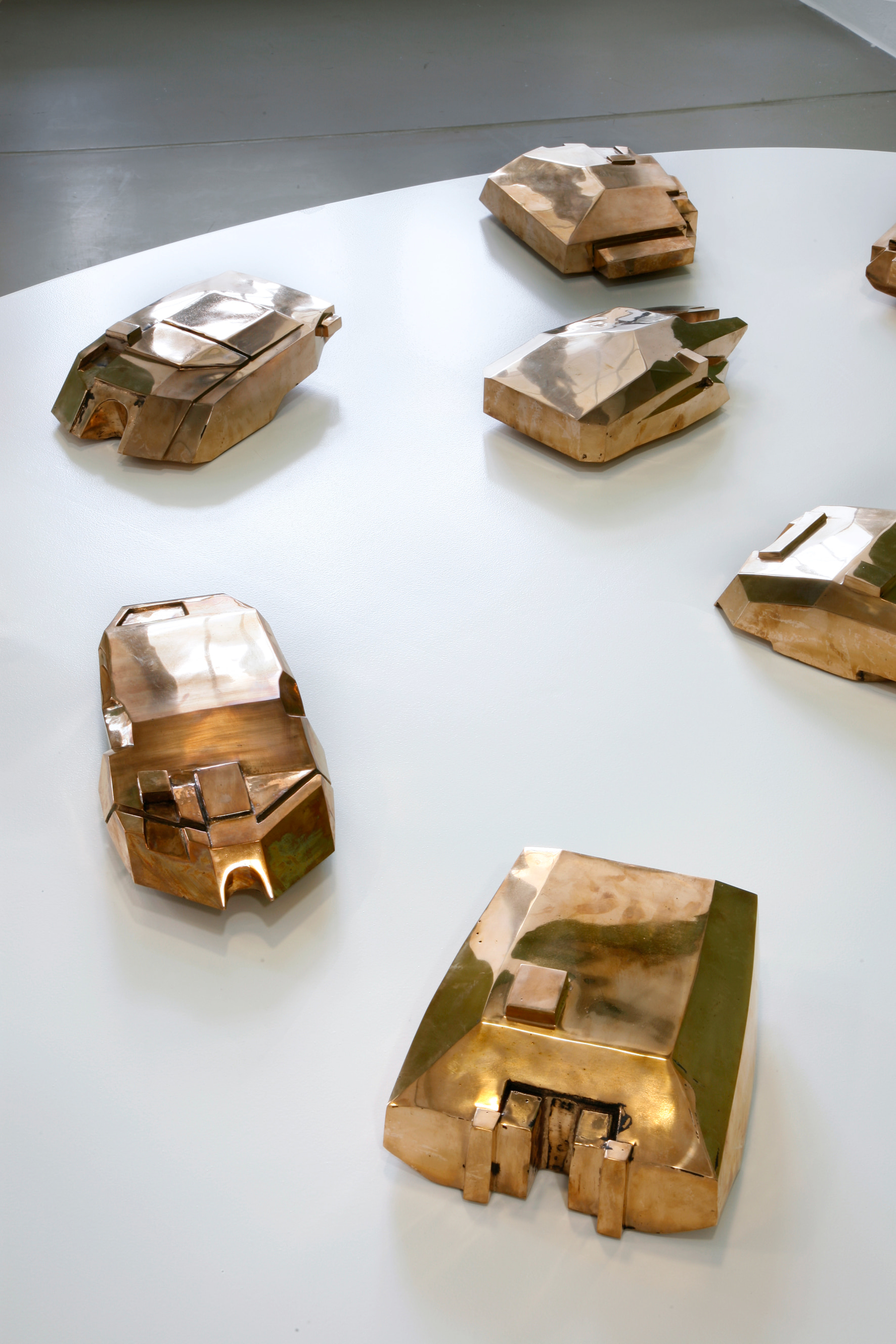
A significant breakthrough in the development of this strategy occurred two years later, when a new work was presented—Products, in which the author switched to polished metal, borrowing the structure of objects ranging from the tanks of different countries, with turrets being stripped of fittings and barrels. The artist managed to reveal many architectural codes used in the art work.
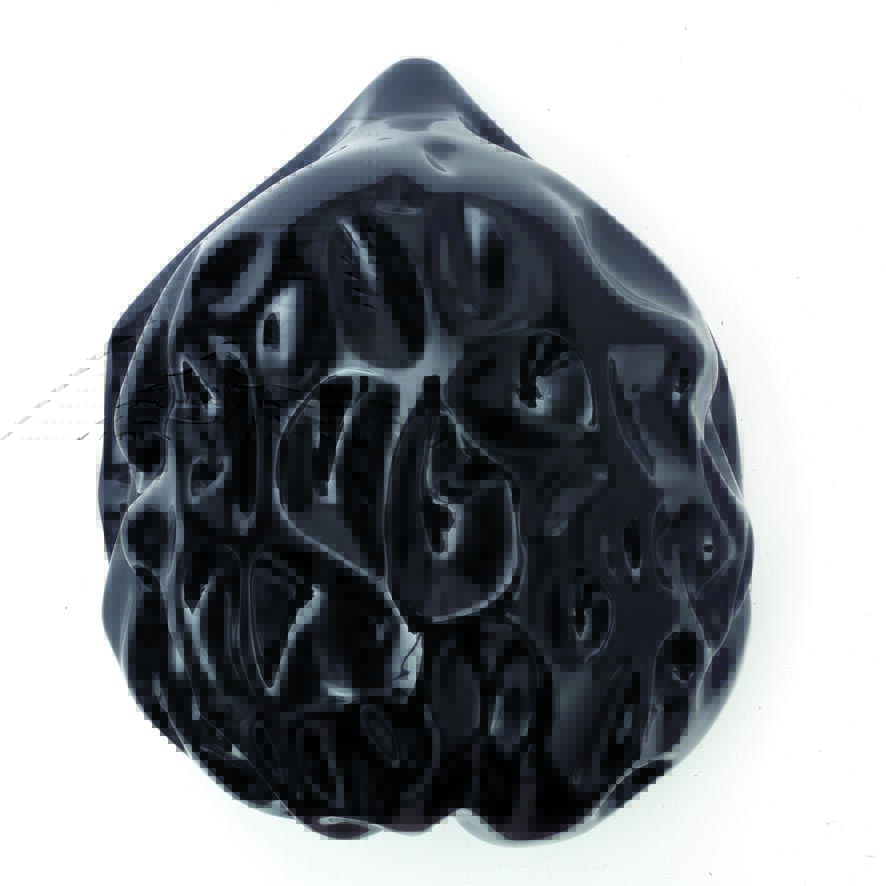
“The Golden Fruit of Natalie Sarrot” is one of the smallest works of this period. It could be called a diptych. It introduces an important innovation: the author endows emptiness with plastic tangibility, debunking the fetishization of the art object.
.jpg)
2001 – 2003
NON-SPECTACULAR ART
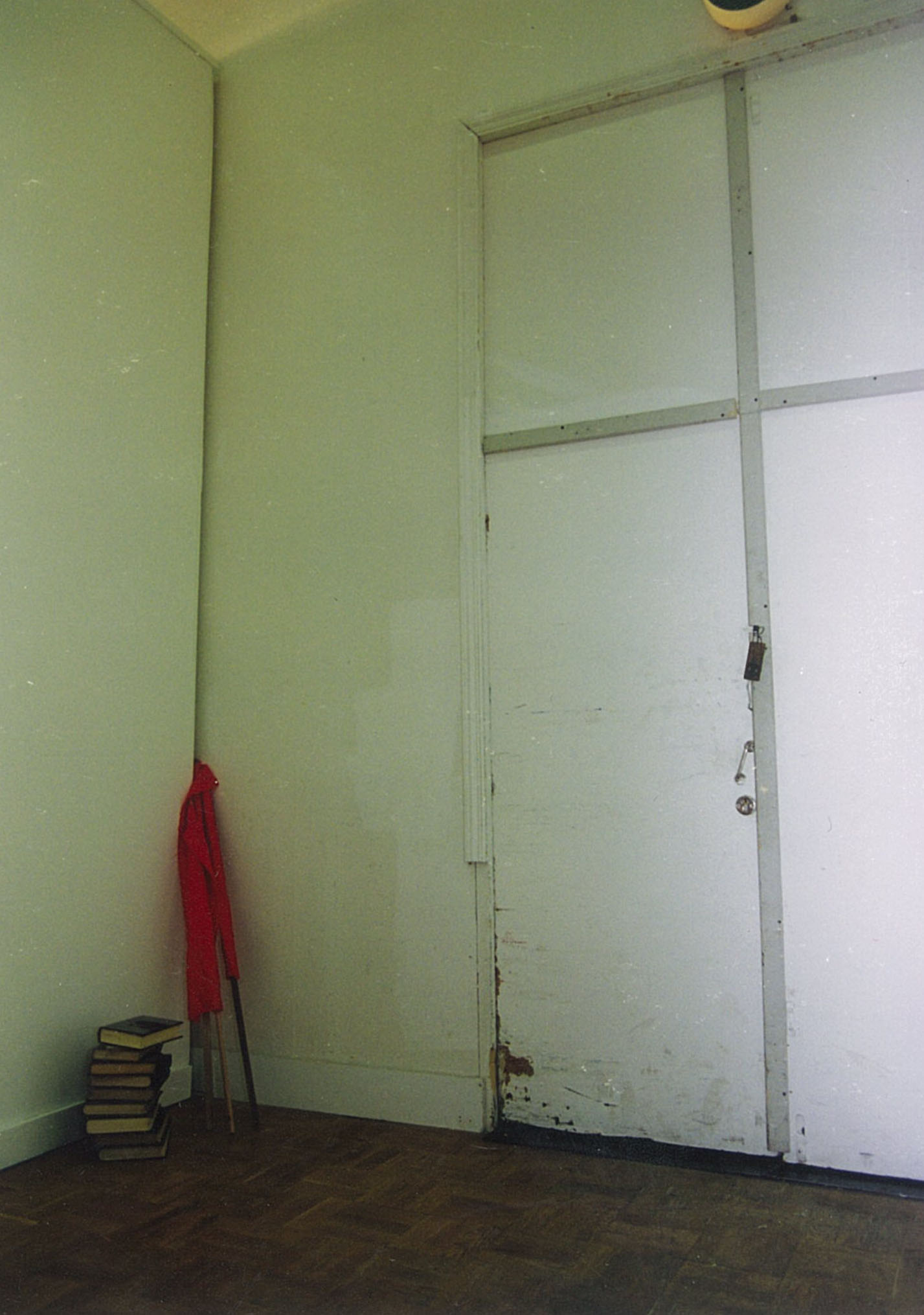
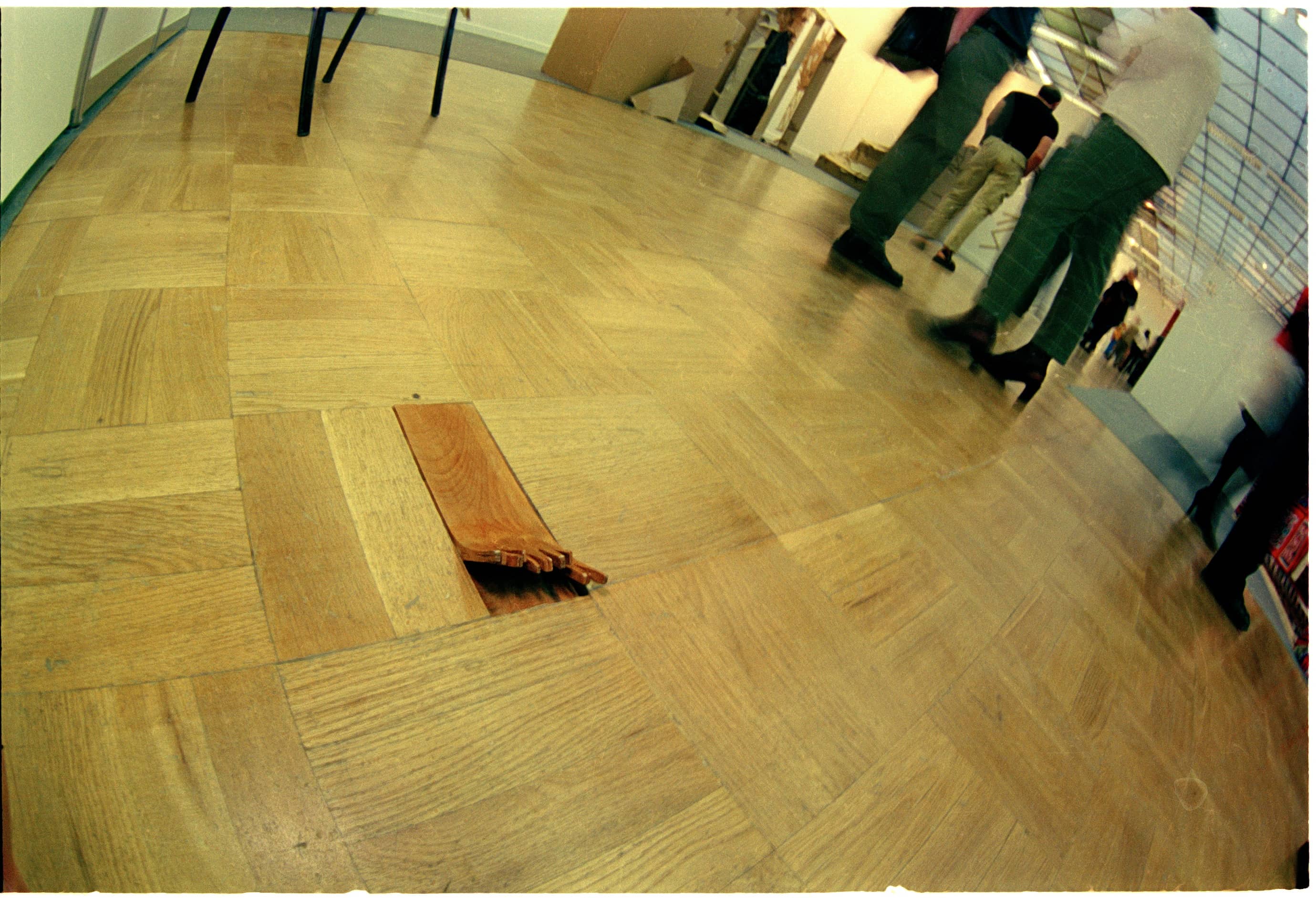
The Milllenium brought radical changes in both Osmolovsky’ ideological aspirations and his poetics. The artist’s participation in the international exhibition Manifesto 3 in Slovenia played a major role. He installed in the exhibition’s venue an artillery weapon in a park sewer hatch, which irony and absurdity served as a critique of various forms of radicalism. However, while maintaining the same critical stance, Anatoly Osmolovsky subsequently shifted away to the so-called non-spectacular art, which brings in some minimal, often barely noticeable interventions with a previously existing art context.
As part of the Art Moscow fair in 2001, he created a series of works where the viewer's perspective was fundamentally shifted towards close and attentive examination of small and seemingly unremarkable objects, which nevertheless had clear references to leftist ideas of governmental structures, resistance to capitalism, and changing the world as a whole.
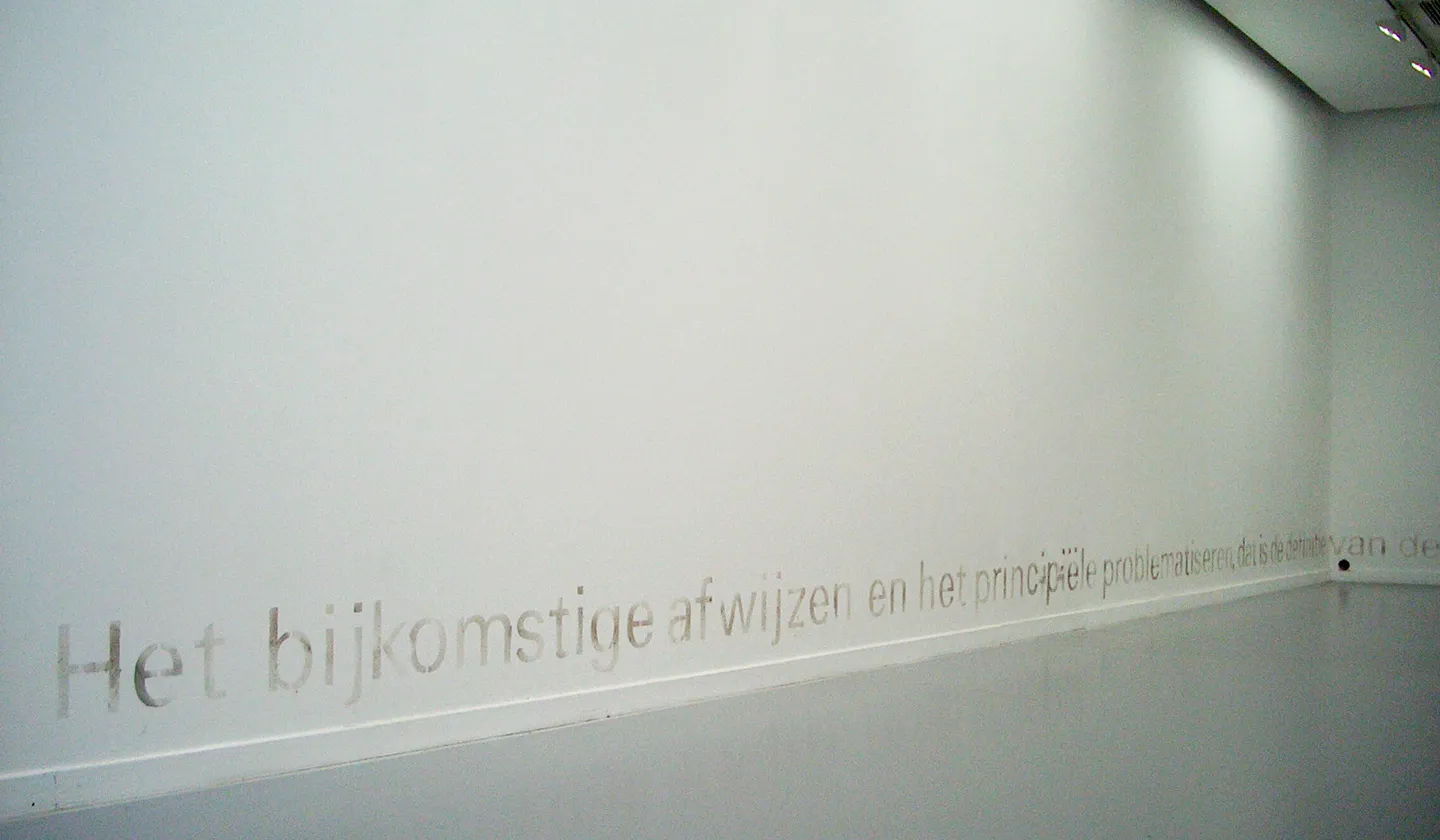
The next project in a museum space (the Museum of Contemporary Art MUHA, Antwerp) involved phrases written in dust at the bottom of walls – the seemingly ephemeral materiality of which, however, was coming into a hidden but powerful contradiction with the abstract nature of the text itself.
Finally, an important milestone in the study of visuality was a video installation tracing the locations of people’s deaths in the city without showing the events themselves — an attempt to outline the gaps and voids that nevertheless acquired some visibility and a form of physicality.
1998 – 2000
AGAINST ALL
Osmolovsky quickly broke into the global art scene. His curatorial experience at international art shows at the age of 24, along with the weakening and the decline of art communities, where he was the ideological inspirer and art theorist, brought him to teaching practices. His teaching practice greatly contributed to the emergence of Radek society — a group of young musicians and artists to come together to take part in protest actions.
On the other hand, the 1995-1996 period was the time of political interaction when the artist collaborated with the well-known Effective Politics Foundation (EPF) and was preparing for the presidential election process. Along with this, his involvement in two separate spheres, so distant from each other, was tied up with his fascination with the ideas of the Sitationist International: both teaching practice and political technology emerged in this context as different types of practical thinking.
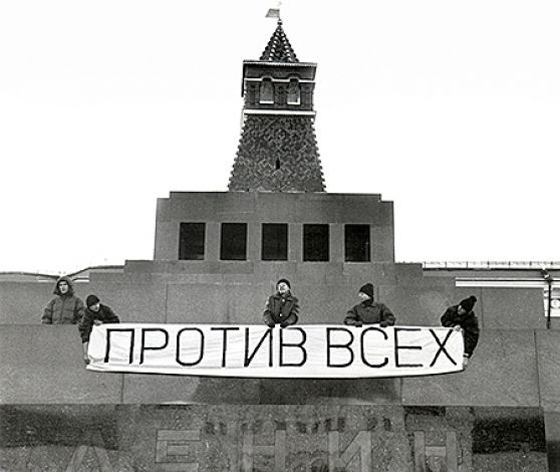
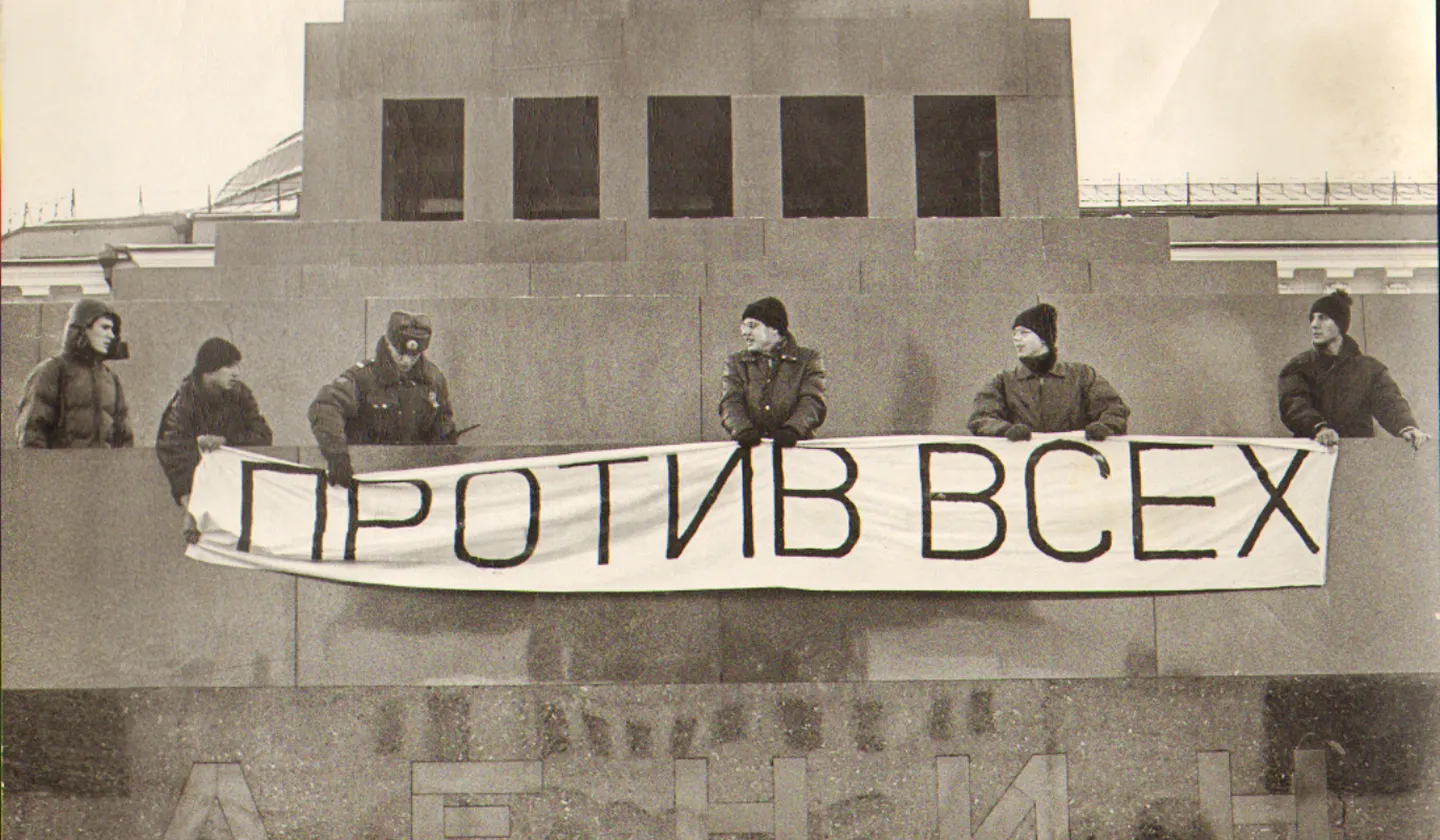
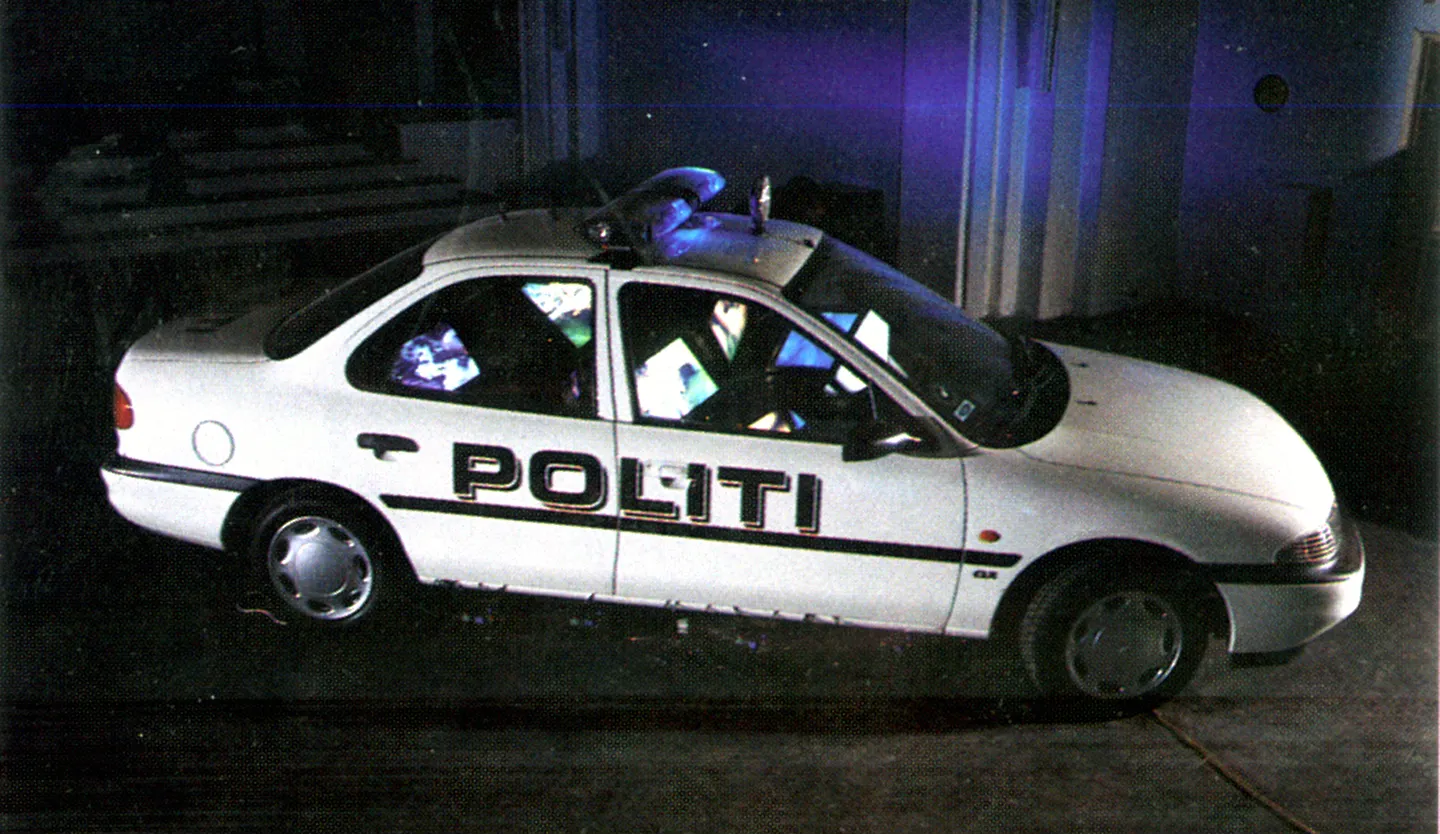
It was the time of the two most powerful actions in Russia’s art history. One was clearly educational in its nature, mimicking the historical experiences of resistance to authority – the 1998 Barricade staged on the 30th anniversary of May 68. A year later, Osmolovsky and four of his colleagues would make an action that was practically identical to the political one, if one did not know the context: they physically hanged a banner with “Against All” slogan on the tribune of Lenin’s mausoleum.Despite the differences in intentions, both actions had similar consequences: hunting down performance artists by Russia’s FSB and administrative penalties. Along with this, artists formulated a methodological distinction between art and politics in terms of “effectiveness” (singularity, exclusivity, and reversibility). Working out boundary lines was a decennial outcome of the 1990s which significantly influenced the theory of Actionism.
.jpg)
1994 – 1997
PROJECTS
1994 – Claustrophobia of anarchy
1994 – Antifascism and anti-fascism
1994 – To see means to obey. If you see the bright light, you’ll go blind and find freedom
1996 – Situation for the Party of Democratic Socialism
1993 – 1994
NEZESUDIK
The new artistic community that emerged around Osmolovsky after the August 1991 coup and the official collapse of the USSR was diverse, although it included a few intrinsically motivated young people by their career in contemporary art. The community welcomed people of different backgrounds, cities and countries like Israel, Georgia, and Ukraine, those, who were well past adolescence and were guided by more individualistic rather than collective interests.
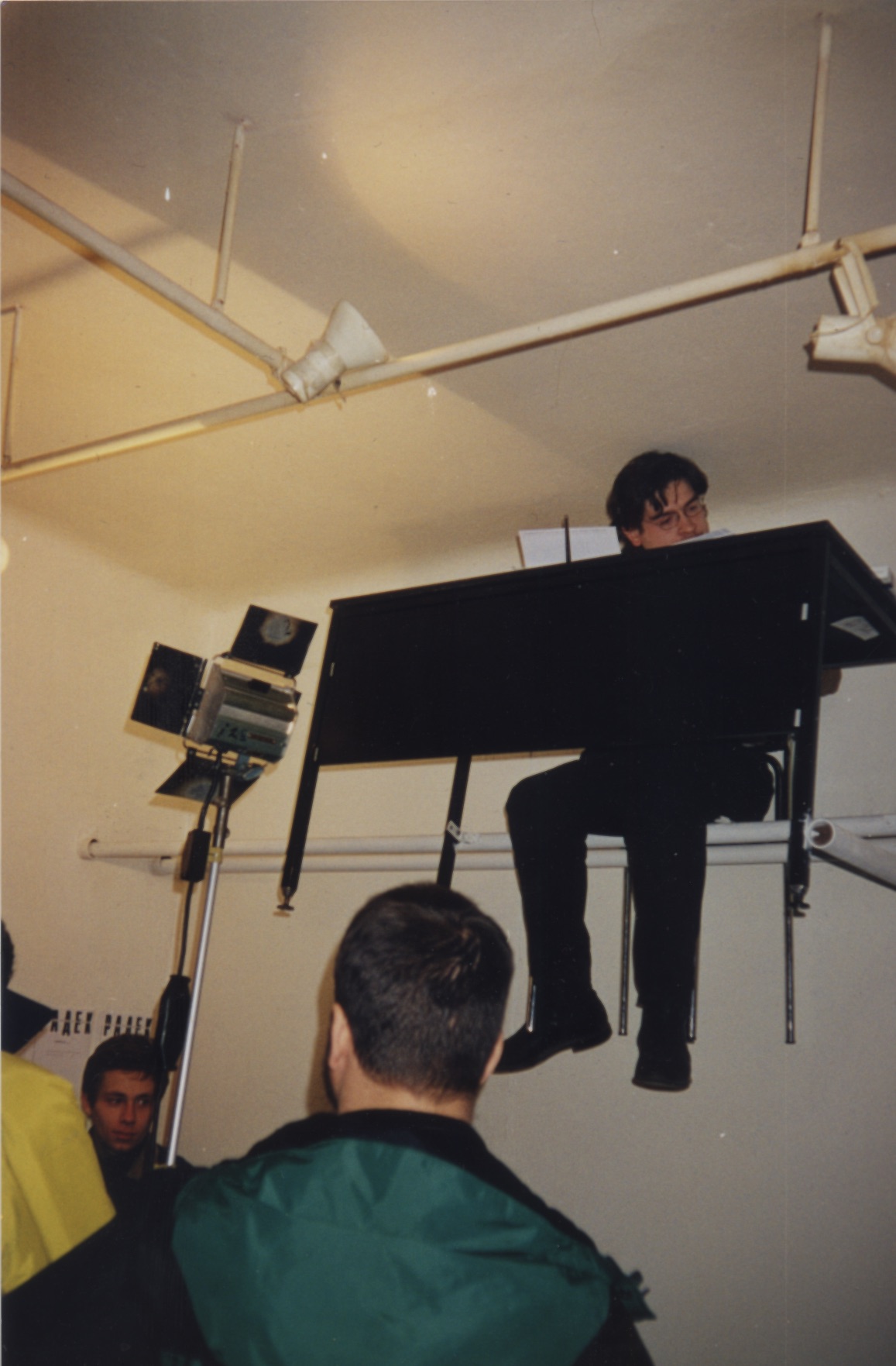
Nevertheless, the new generation was continuously seen as an opposition to the Soviet underground, and above all, to the Moscow conceptual school. The response to the collective inquiry about the possible outlines of a new artistic ideology was the “Revolutionary-Competitive Program of Nezeziudik,” formulated by Osmolovsky and The Last Manifesto, published in the art magazine Radek. The publication provided a conceptual framework to early experiments that went beyond the generally accepted concept of contemporary art.
Although the Radek magazine did not release new issues on a regular schedule, it had a few more print runs in the 1990s. At this time, it had an impact on the visual language and style of the artist's works: a desire for conciseness, use of photographs, collage, combinations of image and text, and provocative, arrogant images.
.jpg)

1990 – 1992
E.T.I.
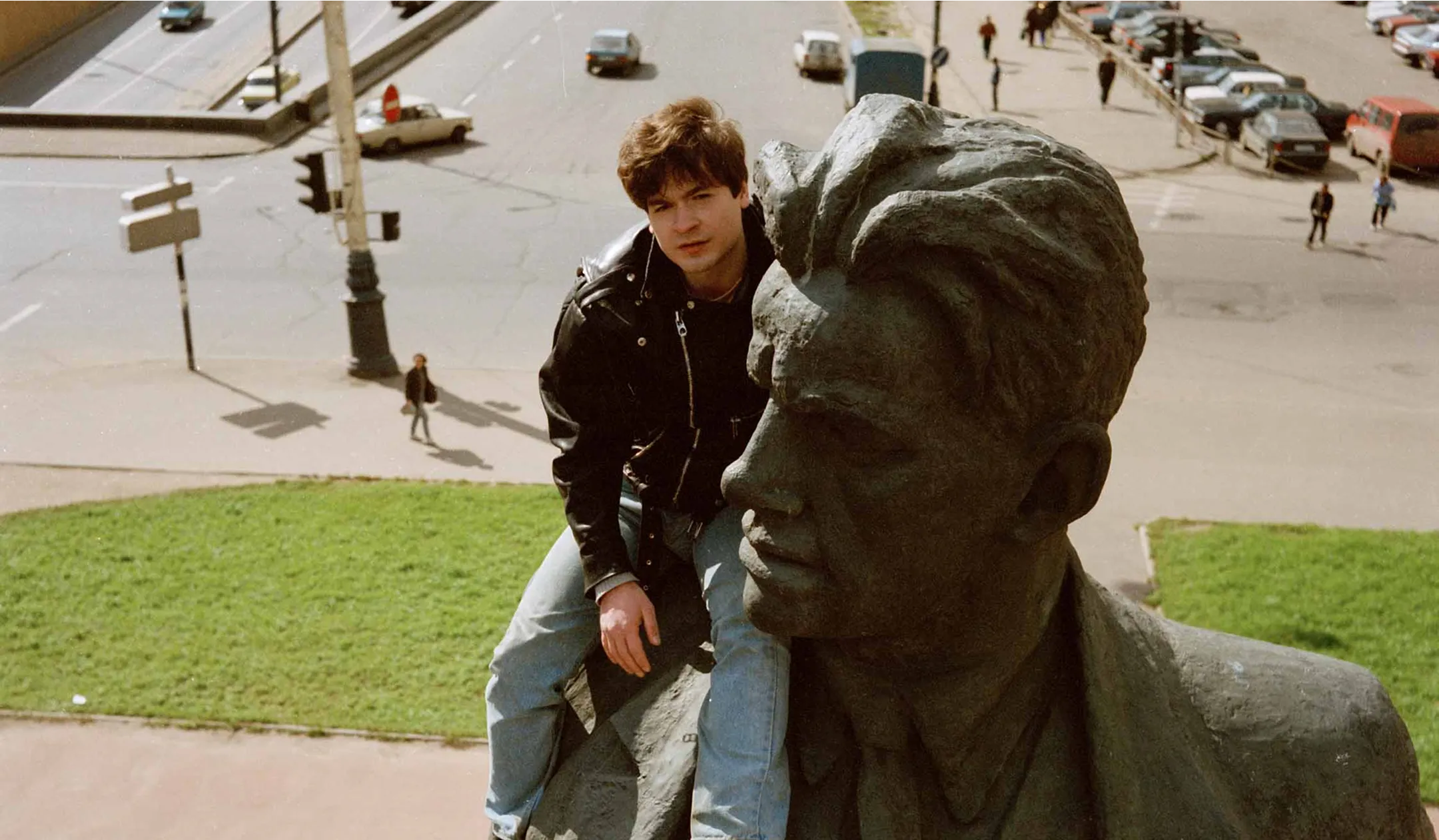
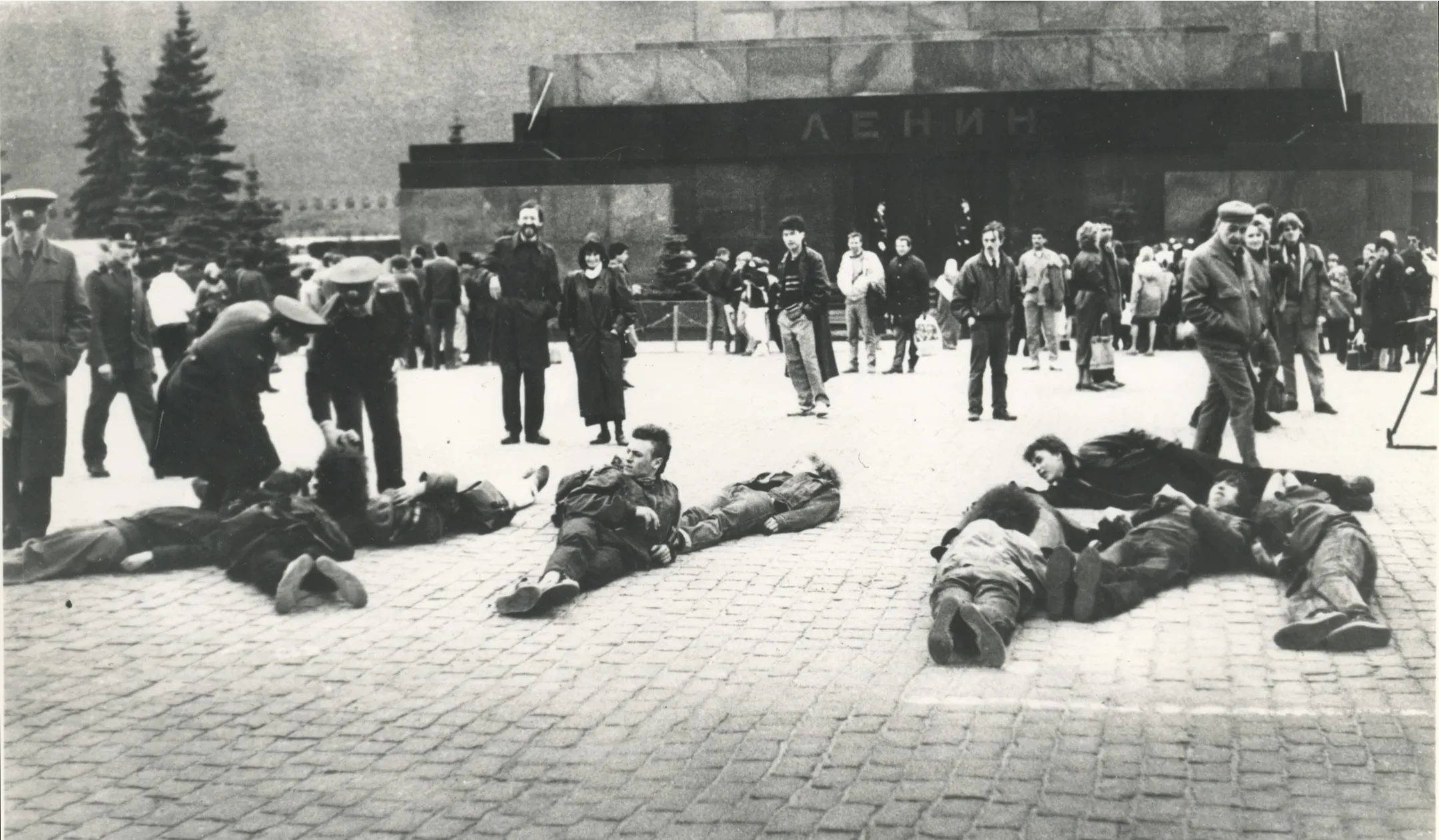
The "E.T.I." (expropriation of the territory of art) movement (there are two meanings here: on the one hand, the one that's been deciphered, and on the other, an attempt to incorporate various colloquial puns like "These, well, those who..." and so on) existed from 1989 to 1992.
The main organizers were A. Osmolovsky (artist, theorist) - ideas, organization; Dmitry Pimenov (poet) - ideas; Grigory Gusarov - organization and media relations. About fifty activists could be gathered. They disbanded because the research program was almost completely completed, but above all because journalists began to expect us to take action (for their asshole news stories) - and working for the media machine was utterly repugnant to us.
.jpg)
1987 – 1990
POETRY
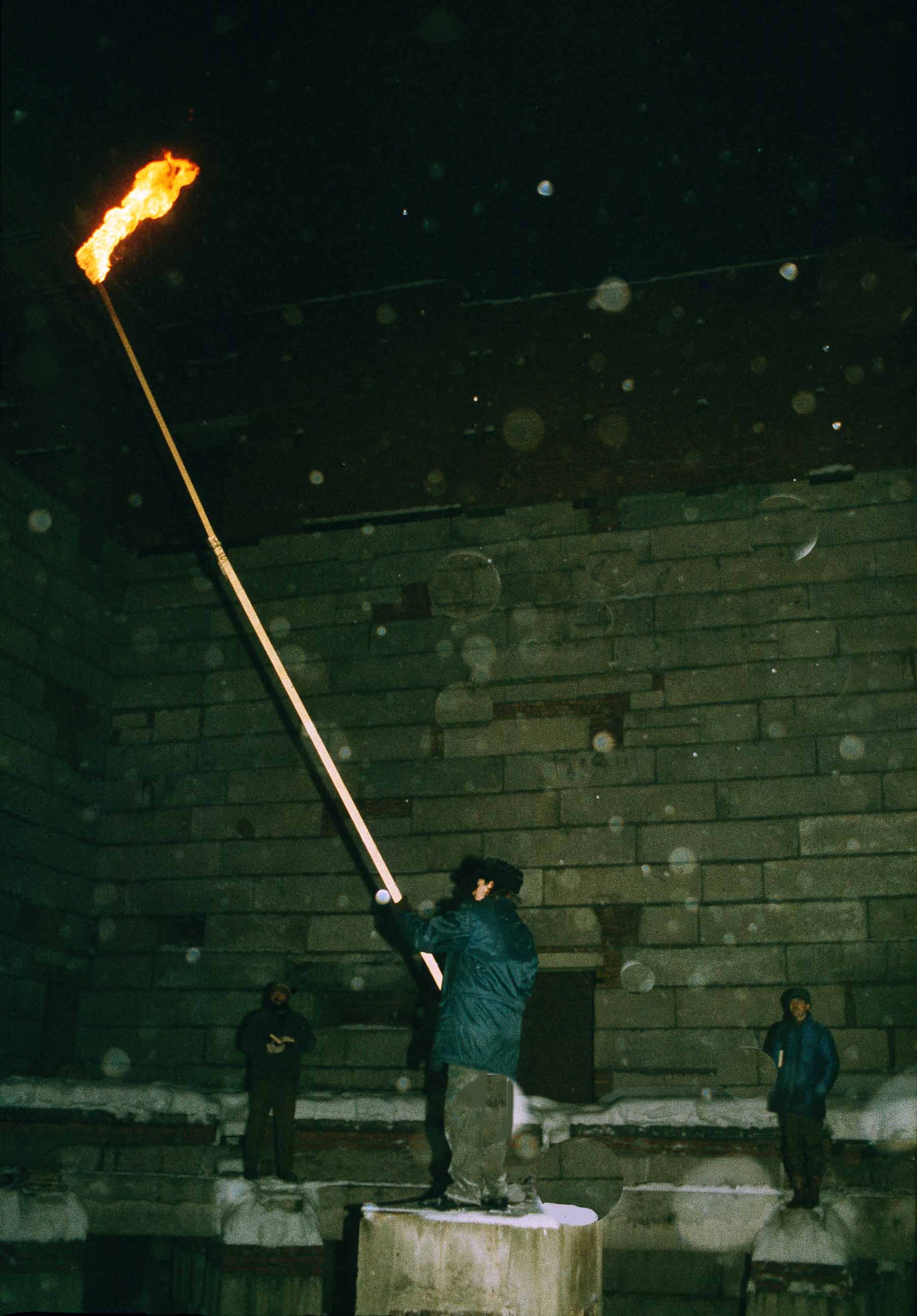
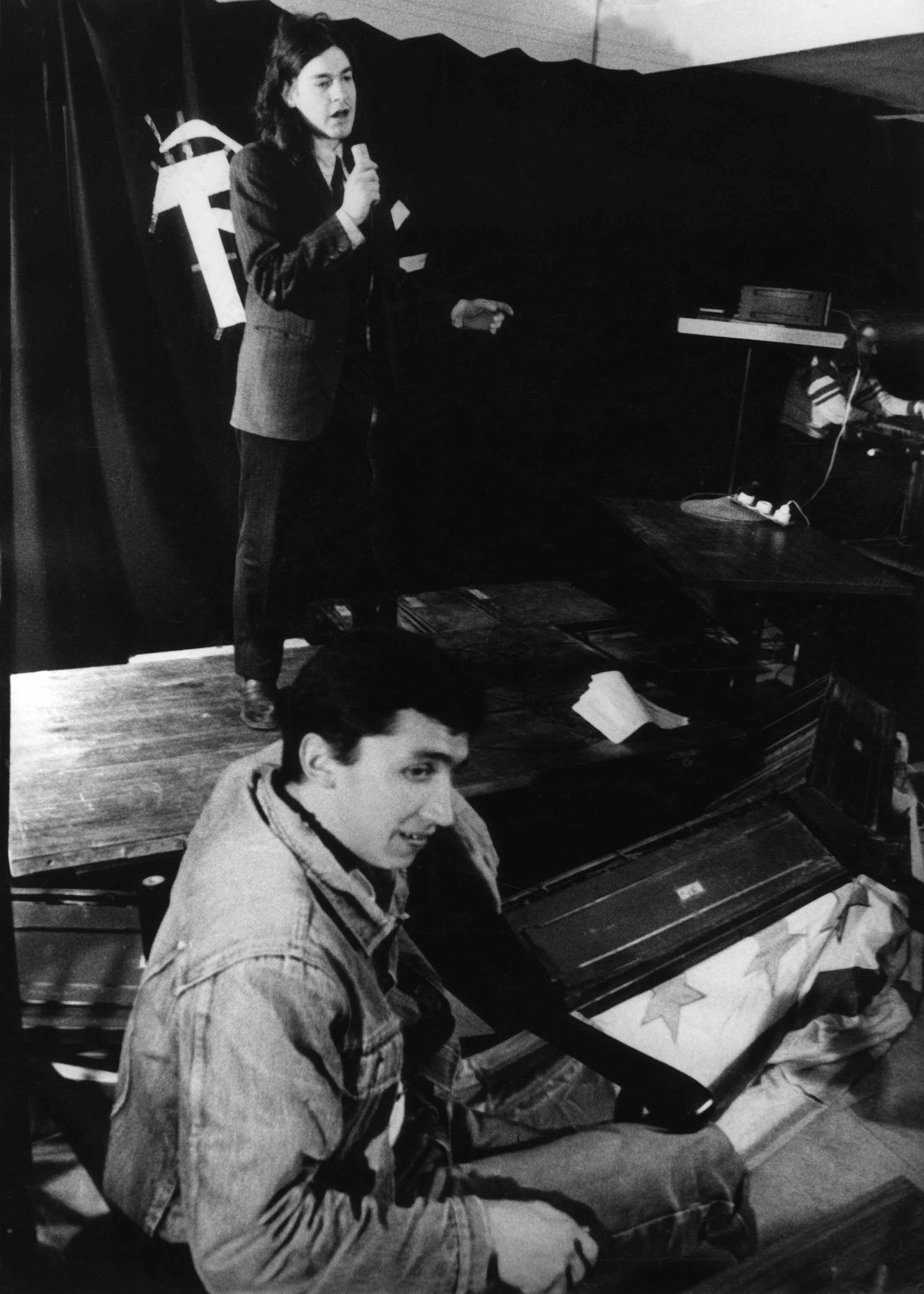
Anatoly Osmolovsky started his artistic career at the age of 17. In 1987, he joined the poetry group Vertep, which was the first to perform publicly in pedestrianized Arbat Street. The Vertep group became one of a social phenomenon. Literary discussions in the circle of its members brought about the creation of an avant-garde faction that was focused on experimenting with different type of poetic forms and poetic prose.
The new association that emerged was titled the Ministry of Problems of the USSR (A. Osmolovsky, D. Pimenov, G. Turov, G. Gusarov). The most important event was the literary-critical seminar “Terrorism and Text,” where D. Prigov, L. Rubinstein, and Y. Arabov were in attendance. The feature about this event was published in Komsomolskaya Pravda (“And you, my friends, whatever outfit you wear”).
The literary group the Ministry of Problems of the USSR became the setting to enable formulation of Osmolovsky’s theoretical approaches over the next two decades. All the way up through 2022.
.jpg)