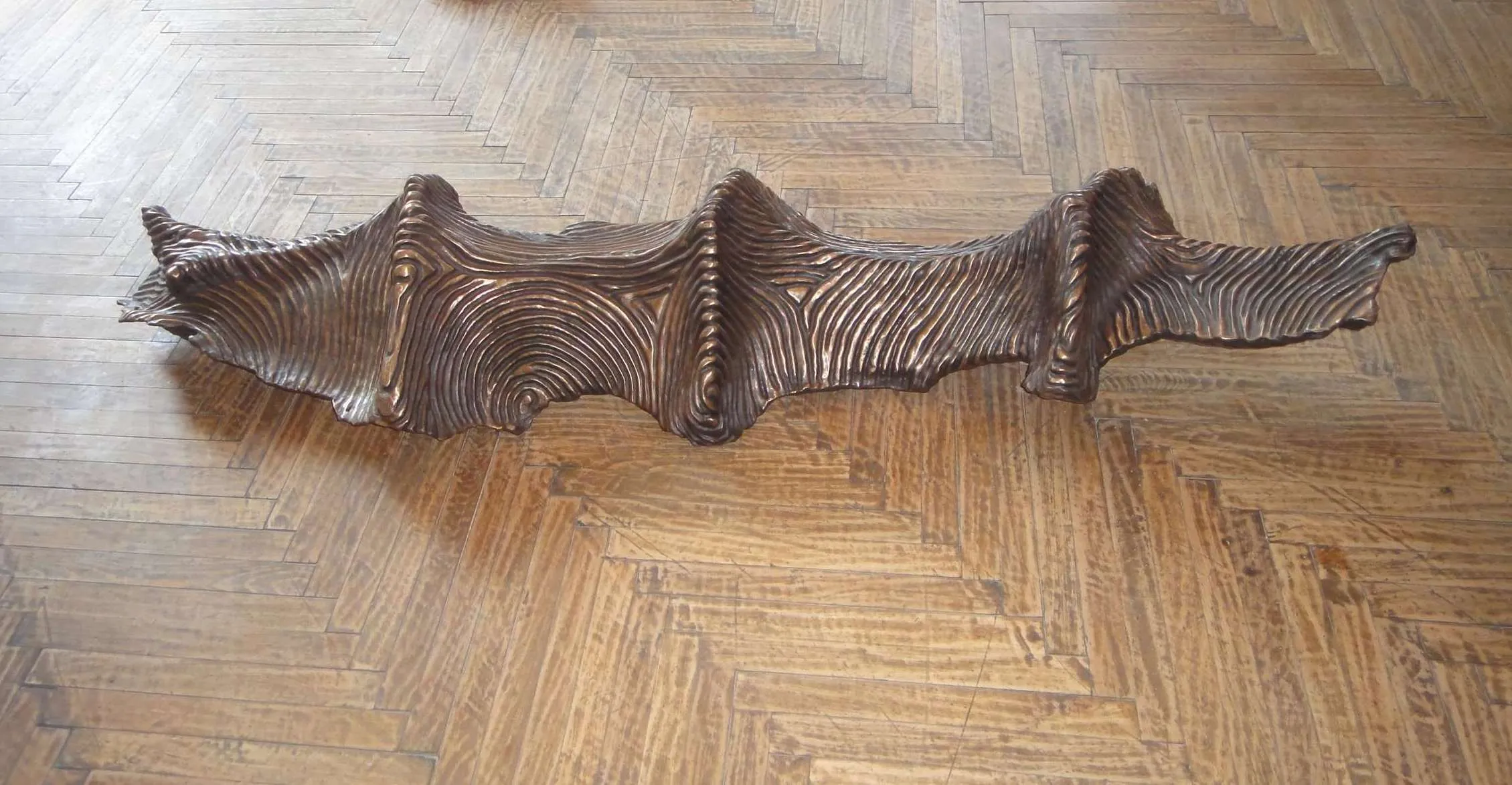
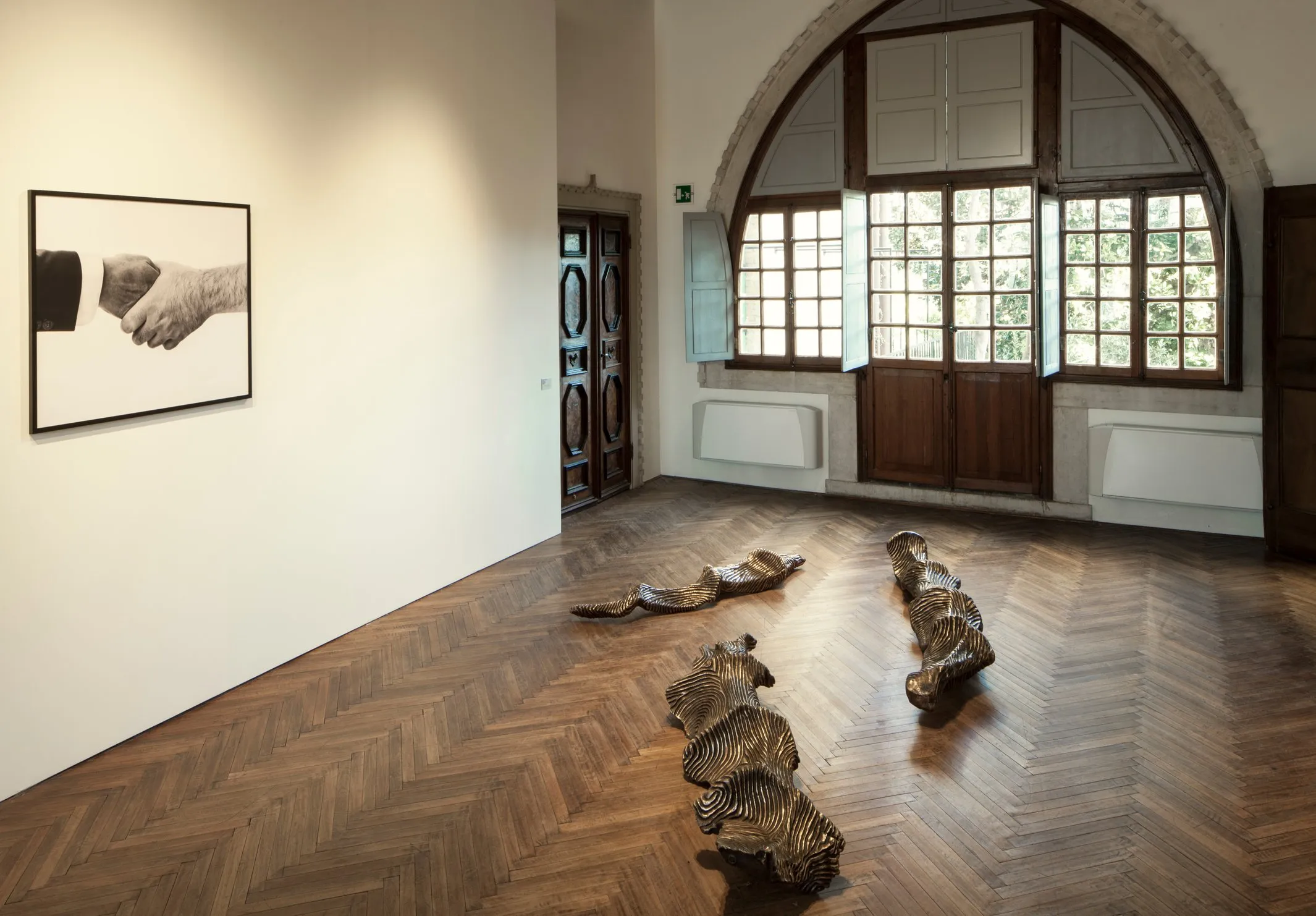
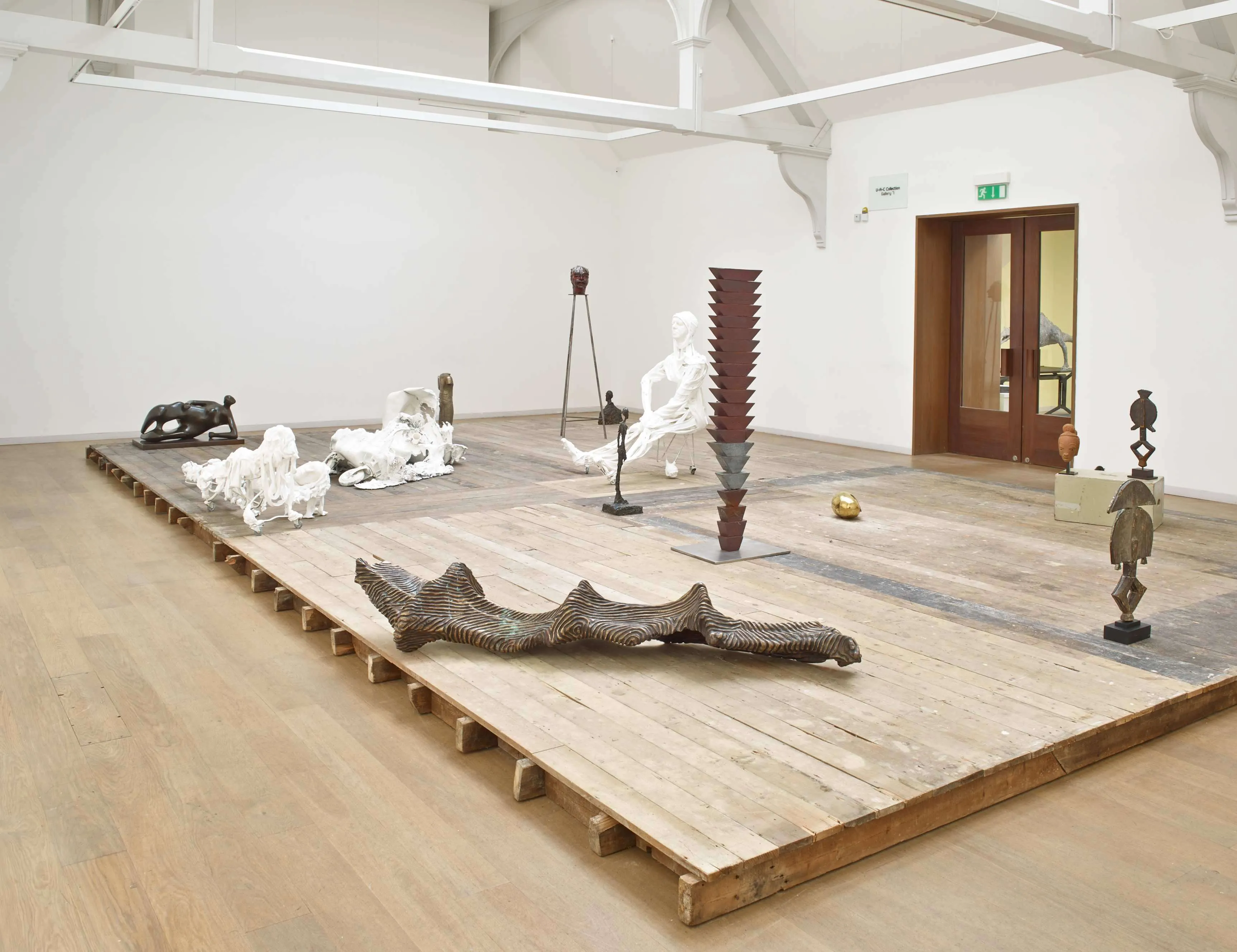
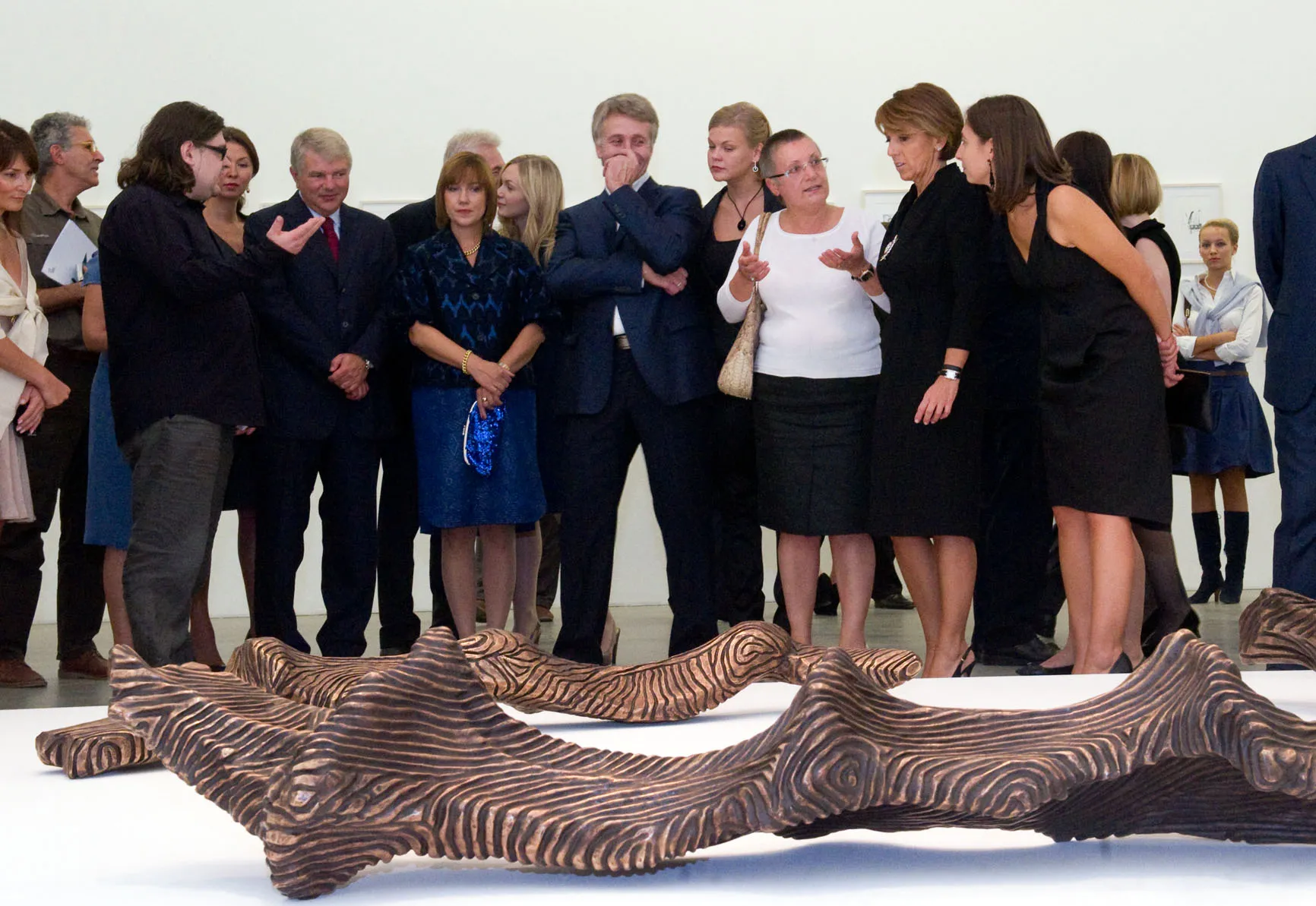
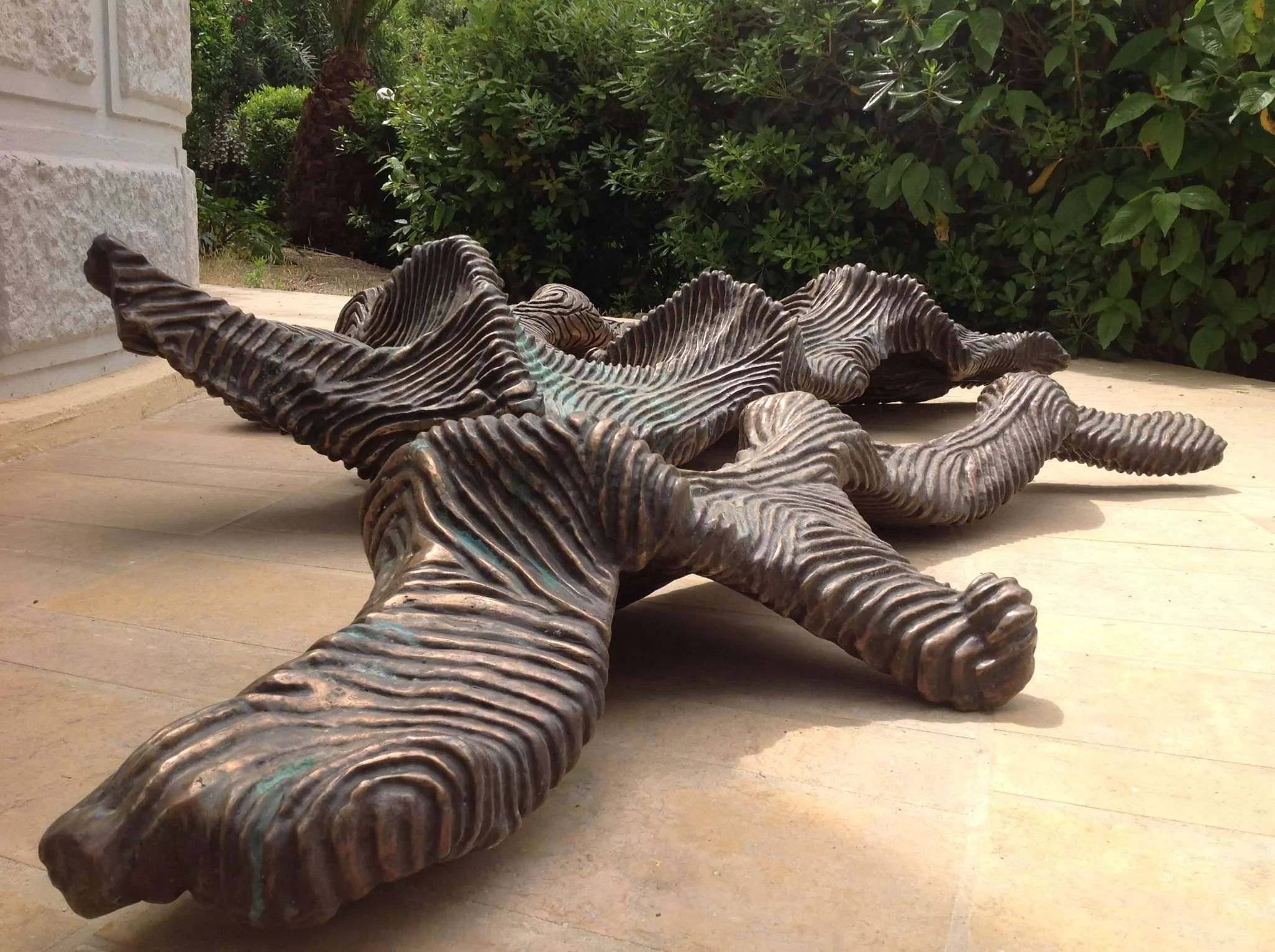
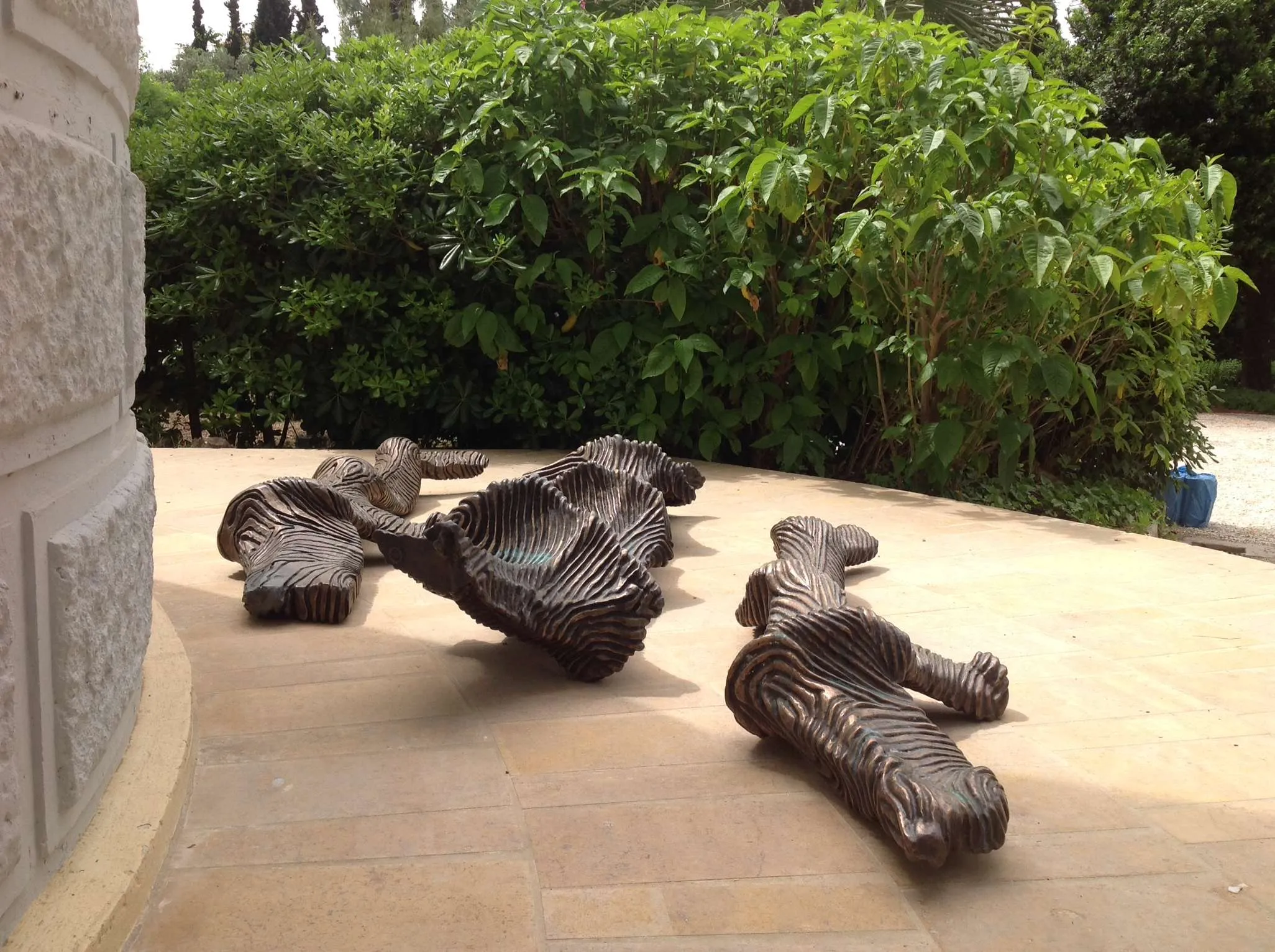
Rot Front, leftovers
2010
Bronze, 5 parts, 60 × 260 cm
Rot Front is the name of a German pro-communist organization from the 1920s. It had its own specific greeting-a raised fist – that was then adopted by many left wing groups, partes and organizations as a universal symbol of solidarity and eagerness for revolutionary resistance. These bronze casts of enlarged imprints on a piece of clay that has been held tightly inside a clenched fist are a physical and monumental trace of this type of gesture of defiance. The squashed pieces of clay sacrifice their own form to the revolutionary salute - the harder the pressure, the more compacted the remaining piece of clay. Through these works, Osmolovsky is constructing monuments to heroes committed to their ideals and willing to fight for them. Hand-prints impressed onto the surface of the sculpture become a metaphor of past revolutions and the sacrifices they have entailed. These sculptural remnants also resemble the fossilised bones of prehistoric animas, archaeological finds or ancient ruins.
Anatoly Osmolovsky:
“As is well known, the imprint of a clenched fist also has a very pragmatic application: it can function as a knuckle-duster. Without external spikes, such a “hidden” knuckle-duster multiplies the force of a punch while remaining visually unobtrusive, misleading the opponent.
At first, I intended to make Remnants precisely in the form of a knuckle-duster. However, I soon realized that even this non-obvious functionality weakened the core idea of the work. Remnants are something pitiful, useless, deprived of any purpose — something that can no longer serve any function.
This led to a different idea: not a knuckle-duster, but forms resembling broken spines, coral structures, or fragments.
At this point, another, less obvious conceptual aspect became important. The tighter the fist is clenched, the less volume remains inside it. A clear parallel emerges here: the greater the intensity of historical struggle, the tighter the fists were clenched, the smaller, thinner, more fragile the remnants become.
Ultimately, they are truly good for nothing and remain only as pure memory. This is why the pitiful and awkward quality of their form is not a flaw, but a necessary effect. It is a melancholic form.